

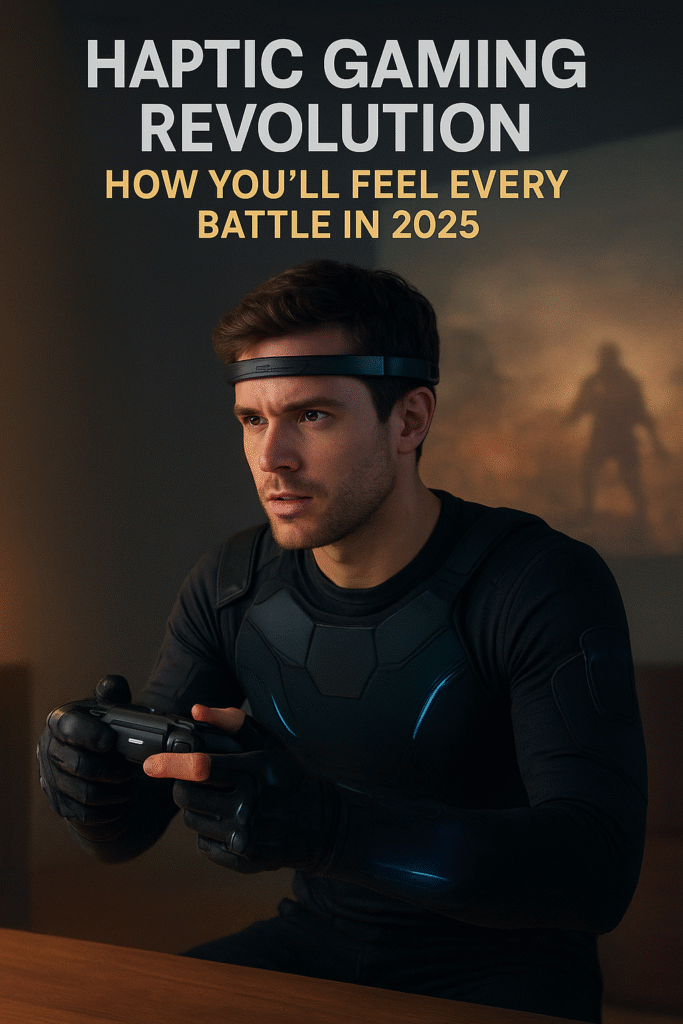
Gaming immersion is about to reach a level we’ve never experienced before. In 2025, haptic feedback technology — the science of touch — is transforming gaming into something you can feel. From the impact of bullets to the tension of a bowstring, you won’t just play the game… you’ll live it.
💡 What Is Haptic Gaming?
Haptic technology lets you experience touch sensations through vibrations, pressure, and motion. You might’ve felt simple haptics in your smartphone or controller before — but the new generation goes way beyond that.
Imagine wearing a haptic suit that lets you feel the recoil of your weapon in Call of Duty, the rain in a racing game, or the heartbeat of your character in a horror game.
That’s not fantasy — that’s haptic gaming in 2025.
🕹️ The Tech Behind the Sensation
The latest haptic gear uses:
- Electroactive polymers that contract and expand to simulate touch and impact.
- Ultrasonic waves that create sensations mid-air (no contact needed!).
- AI-driven feedback systems that sync real-time game physics with your movements.
Brands like bHaptics, Teslasuit, and Sony are leading the charge. The new PlayStation DualSense Edge controller, for instance, offers hyper-precise haptics that mimic everything from gunfire to footsteps.
🎮 Haptics in PC and Console Gaming
🔹 PC Gaming
Gamers using VR headsets like Meta Quest 3 or HTC Vive XR Elite are already combining them with haptic gloves and vests. This creates full-body immersion — when your character takes damage, you actually feel it.
🔹 Console Gaming
Sony has doubled down on haptic feedback, while Microsoft is rumored to bring adaptive triggers and tactile sensations to its next-gen Xbox controller.
Developers are using haptics to make boss fights more emotional, racing more intense, and exploration more physical.
📱 Mobile Gaming Joins the Party
Mobile gaming is no longer just tapping on a screen. With the rise of wearable haptic wristbands and AI-tuned vibration engines, even your smartphone can deliver immersive touch feedback.
Games like PUBG Mobile and Genshin Impact are testing haptic modes that simulate wind, explosions, and impacts — turning mobile gaming into a full-body experience.
🏆 eSports: Feeling the Pressure (Literally)
In eSports, milliseconds matter — and haptics are helping pros get better. Imagine a player’s gloves tightening slightly when they grip too hard or a vest vibrating when a teammate takes damage nearby.
Teams are already testing bio-haptic suits that track stress and reaction times — merging data analytics and physical response in real-time gameplay.
🤖 The Role of AI in Haptics
Artificial Intelligence powers modern haptic feedback systems. AI learns how players react physically — when they flinch, when they focus, when they lose control — and adjusts the feedback accordingly.
This means every gaming session feels tailored to you.
AI ensures haptic feedback isn’t random — it’s emotional, adaptive, and personal.
⚔️ Challenges Ahead
Like all great tech, haptic gaming faces some roadblocks:
- High cost of full-body suits and accessories.
- Game developer support — not all titles are optimized yet.
- Battery life and heat issues for wearable devices.
But as more AAA studios adopt the tech, prices will drop and accessibility will skyrocket.
🔮 The Future: The End of Passive Play
In the next few years, expect hyper-realistic gaming experiences where:
- You can feel magic spells in RPGs.
- Temperature changes reflect in your gear.
- Virtual sports feel physically real.
The line between virtual and physical is fading — and haptics is leading that charge.
🧠 Final Thoughts
Gaming used to be about visuals and sound. In 2025, it’s about sensation.
Haptic technology is turning every click, every punch, every explosion into a physical experience. Whether you’re a PC gamer, console warrior, or mobile competitor — soon, you won’t just play your favorite game… you’ll feel it.
Welcome to the Haptic Gaming Revolution — where immersion finally gets real.


