
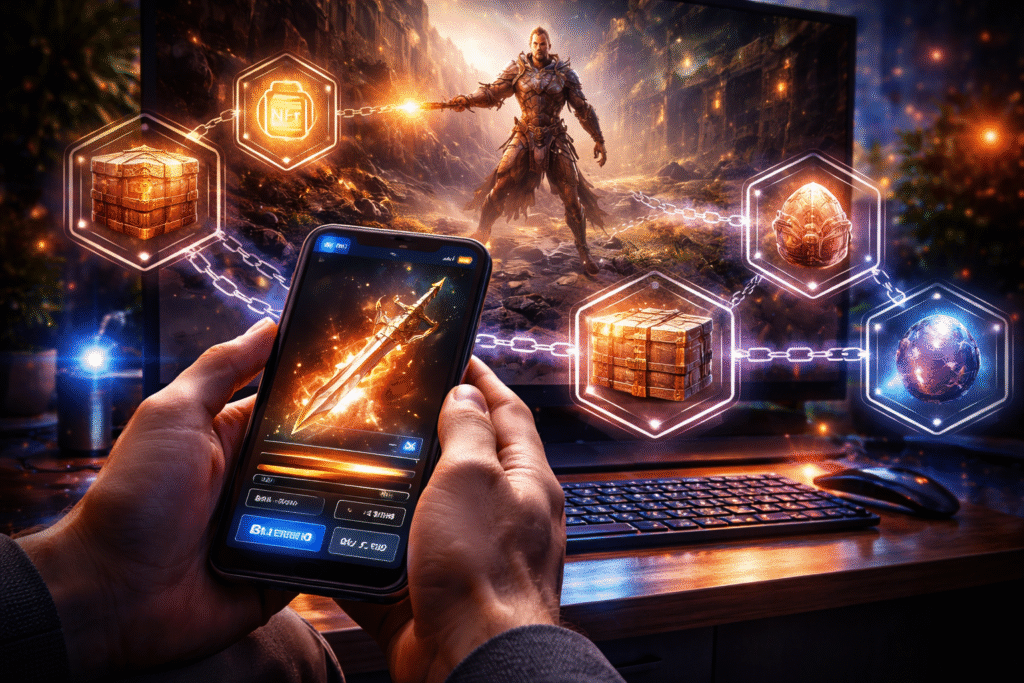
Gaming is evolving beyond just playing — it’s now about owning. One of the most talked-about and controversial trends in the gaming industry today is digital ownership powered by blockchain technology.
Players are no longer limited to using in-game items temporarily. With new technologies, they can truly own, trade, and even sell their digital assets across platforms.
This shift is creating a new economy inside gaming.
🔗 What Is Digital Ownership in Gaming?
Traditionally, items like skins, weapons, or characters in games are locked within the game itself. Players can use them, but they don’t actually own them.
Blockchain technology changes this by allowing items to exist as unique digital assets that players fully control.
This means:
- Items can be traded outside the game
- Ownership is secure and verifiable
- Assets can carry real-world value
- Players have more control over their purchases
This introduces a completely new way of interacting with games.
💻 Impact on PC Gaming
PC gaming is leading the adoption of blockchain-based systems due to its open ecosystem.
Many experimental games and platforms are exploring:
- Player-owned marketplaces
- Decentralized economies
- Cross-game asset usage
Companies like Ubisoft have already started experimenting with blockchain features in games.
This could reshape how PC gamers buy, sell, and interact with in-game content.
🎮 Console Gaming and Blockchain
Console platforms such as:
- PlayStation 5
- Xbox Series X
- Nintendo Switch
are still cautious about fully integrating blockchain technology.
However, as demand grows, future console ecosystems may include secure digital ownership systems that allow players to carry assets across games and platforms.
📱 Mobile Gaming and Digital Economies
Mobile gaming is already familiar with in-game purchases, making it a natural fit for blockchain-based ownership.
With this technology, mobile players could:
- Trade items with other players
- Earn rewards that have real-world value
- Participate in player-driven economies
This could significantly change how mobile games are monetized and experienced.
🏆 Impact on eSports and Competitive Gaming
Digital ownership could also influence eSports by introducing tradable rewards, exclusive items, and player-driven economies.
Players might earn unique assets from tournaments that can be sold or traded, adding new value to competitive gaming.
This could create new revenue streams for both players and organizers.
⚠️ Challenges and Controversy
Despite its potential, blockchain in gaming faces several challenges:
- Concerns about environmental impact
- Security risks and scams
- Player resistance to monetization models
- Regulatory uncertainty
Many gamers are still skeptical about how this technology should be used.
🚀 The Future of Player-Owned Gaming
Digital ownership is still in its early stages, but its potential is massive.
In the future, players may truly own everything they earn or purchase in games — and carry those assets across different titles and platforms.
Gaming could evolve into a fully player-driven economy where time, skill, and creativity have real value.
This is more than just a trend — it’s a shift in how players interact with virtual worlds.
The question is no longer just “What can you play?”
It’s becoming “What do you own?” 🎮