
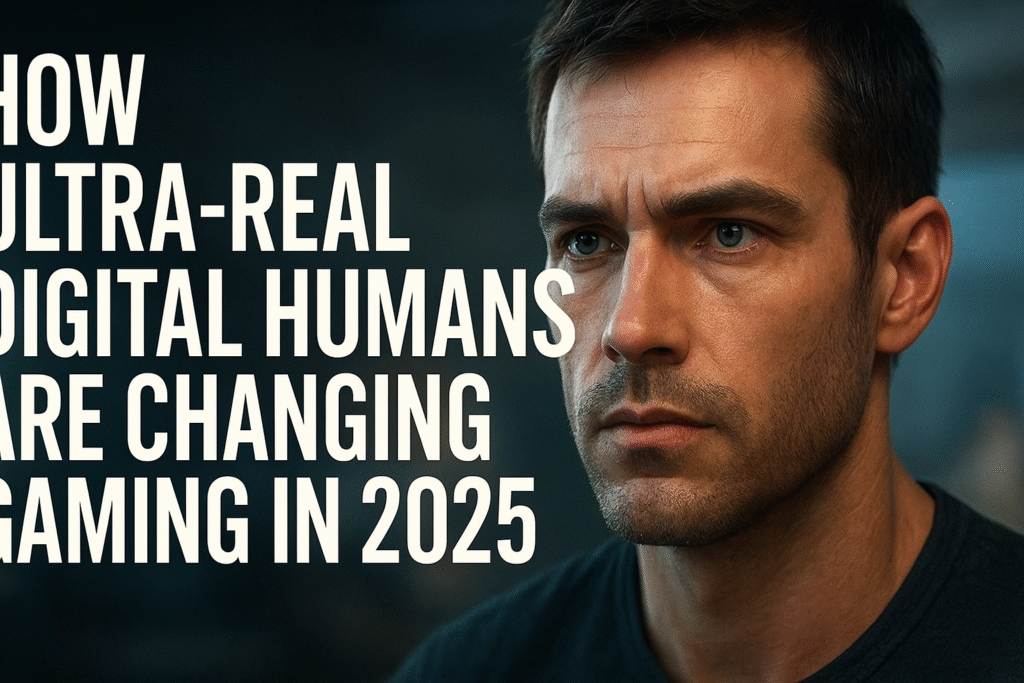
In 2025, gaming is entering one of its biggest transformations ever — not because of better graphics or bigger maps, but because of something far more groundbreaking:
👉 Ultra-real digital humans powered by neural engines and AI motion systems.
Game characters are no longer simple NPCs with scripted behaviors.
They are starting to look, move, talk, and even feel like real human beings.
This shift is so massive that many players say it feels like crossing the line between games and reality.
Let’s explore why digital humans are suddenly everywhere — and why the world can’t stop talking about them.
🧬 1. Photorealistic Faces That Look Alive
For years, video games struggled with human faces:
- stiff expressions
- robotic smiles
- dead eyes
But in 2025, new “Neural Facial Engines” have changed everything.
These systems:
- scan micro-expressions
- simulate realistic eye movement
- generate natural wrinkles, pores, and skin textures
- adjust lighting dynamically based on emotion
When characters cry, the tears look real.
When they laugh, you see genuine facial motion.
When they’re angry, their entire expression tightens like a real person.
The gaming community is calling it:
“The end of uncanny valley.”
🎤 2. AI-Driven Voices That Adapt to Your Choices
Game characters are now using adaptive AI voices — not pre-recorded lines.
This means they can:
- change tone depending on your behavior
- remember past interactions
- respond with personal emotion
- generate new dialogue on the fly
Imagine an RPG where your companion speaks to you as naturally as a real friend.
No repeated lines.
No robotic responses.
Some characters even mirror your voice tone during emotional conversations — a feature that became viral on social platforms because of how “real” it felt.
🕺 3. Motion Systems That Capture Human Imperfection
Real humans don’t move perfectly.
We stumble a little, shift weight, hesitate, breathe irregularly.
New AI motion systems introduce:
- micro-movements
- natural weight shifts
- real breathing patterns
- eye focus and blur
- small posture changes
Characters finally feel alive — not just animated.
Players say it feels like acting alongside digital actors.
🧠 4. Emotional AI: Characters That Feel You
This is the trend going viral in 2025.
Characters can now detect:
- your playstyle
- your stress level
- your aggression
- your hesitation
- your decision patterns
And they adapt emotionally.
If you play recklessly, characters may fear you.
If you stay calm and supportive, they may trust you more deeply.
Some players reported feeling emotionally attached to NPCs in a way they never experienced before.
Games are no longer “cold systems.”
They are emotional environments.
🌐 5. The Rise of Virtual Influencers in Games
Digital humans have become so realistic that companies are creating:
- digital streamers
- virtual esports players
- AI-driven story hosts
- interactive NPC creators
- synthetic brand ambassadors
Some virtual influencers have millions of followers and stream 24/7 — without a human controlling them.
Gaming studios now hire AI characters as:
- voice actors
- motion actors
- promotional faces
This trend exploded on TikTok and Instagram, making digital humans a viral phenomenon.
🎮 6. What This Means for Gaming
This new era brings massive change:
Players get:
- deeper emotional stories
- characters they truly connect with
- cinematic realism during gameplay
- unpredictable interactions
- moral choices that feel personal
Developers get:
- faster content creation
- less reliance on traditional recording
- dynamic storytelling possibilities
Esports & streaming get:
- AI commentators
- virtual co-hosts
- digital analysts
Gaming is no longer just entertainment —
It’s becoming a form of interactive digital cinema.
🚀 7. Are We Ready for the Future of Digital Humans?
This technology is exciting, but also raises questions:
- Will AI replace actors?
- Will digital humans blur reality too much?
- Will emotional AI make games addictive?
- Will players form unhealthy attachments?
One thing is certain:
Ultra-real digital humans are not just a trend —
They are the beginning of a new generation of gaming.
The games of the future won’t just respond to your inputs.
They’ll respond to your emotions, personality, and decisions in ways we’ve never seen before.