
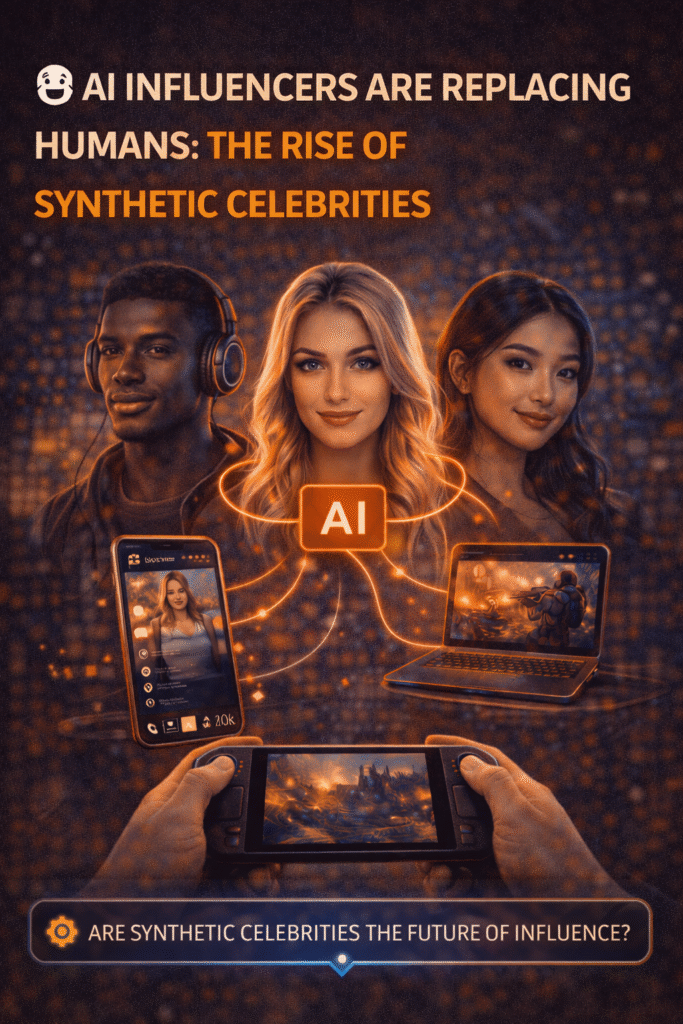
What if your favorite influencer isn’t real?
No childhood photos.
No scandals.
No bad days.
No limits.
In 2025, AI influencers — fully virtual, algorithm-designed personalities — are quietly taking over social media, advertising, and digital culture.
And most people scrolling past them don’t even realize it.
🌐 What Are AI Influencers?
AI influencers are digital characters created using artificial intelligence, 3D modeling, and behavioral algorithms.
They look human.
They talk like humans.
They post like humans.
But behind the scenes, they are controlled by:
AI-generated personalities
data-driven content strategies
trend-predicting algorithms
brand optimization systems
They never age, never sleep, and never go off-brand.
🔥 Why AI Influencers Are Exploding in 2025
This trend is going viral because it solves major problems for brands and platforms.
📈 Brands Want Control — Not Chaos
Human influencers are unpredictable.
AI influencers:
never miss deadlines
never demand higher fees
never cause PR disasters
never violate contracts
Brands can script every word, expression, and opinion.
From a business perspective, this is perfect influence.
🧠 AI Can Optimize Popularity in Real Time
In 2025, AI doesn’t guess trends — it predicts them.
AI influencers can:
analyze engagement instantly
change tone mid-campaign
adapt personality per audience
optimize posting times automatically
Popularity is no longer organic.
It’s engineered.
📱 Social Media Algorithms Prefer Them
AI influencers are designed to perform well on platforms.
They:
fit algorithmic preferences
post consistently
maintain ideal engagement ratios
never take breaks
Platforms quietly reward them — because they boost retention.
🎭 Why People Still Follow Them
You might think users wouldn’t care.
But they do.
💬 Perfect Personalities Are Addictive
AI influencers are designed to:
always reply kindly
never argue
mirror audience values
avoid controversial mistakes
They feel “safe” and emotionally predictable — which builds trust.
🎨 They Represent Impossible Ideals
AI influencers can be:
flawless
stylized
hyper-aesthetic
custom-designed for niches
They don’t reflect reality.
They sell aspiration.
💰 The New Influencer Economy
This shift is reshaping entire industries.
Agencies now hire:
prompt engineers
AI personality designers
virtual stylists
synthetic brand managers
Some AI influencers already:
earn more than human creators
work across languages instantly
run campaigns 24/7
Human influence is becoming optional.
⚠️ The Dark Side of Synthetic Fame
This trend is controversial — and that fuels its virality.
Big questions include:
Should AI disclose it’s not human?
Is this deceptive advertising?
What happens to human creators?
Who is responsible for influence abuse?
There are no clear rules yet.
🔮 What the Future Looks Like
Experts predict:
AI influencers running virtual companies
digital celebrities with fanbases larger than humans
AI-generated music artists and actors
laws regulating synthetic identities
mixed feeds where real and AI creators coexist
Influence itself is being redefined.
🏁 Final Thoughts
AI influencers aren’t replacing humans overnight.
But they’re changing what influence means.
In the future, fame won’t depend on talent, luck, or authenticity.
It will depend on data, design, and algorithms.
The next influencer you trust might not be a person at all.
And you may never know the difference.