

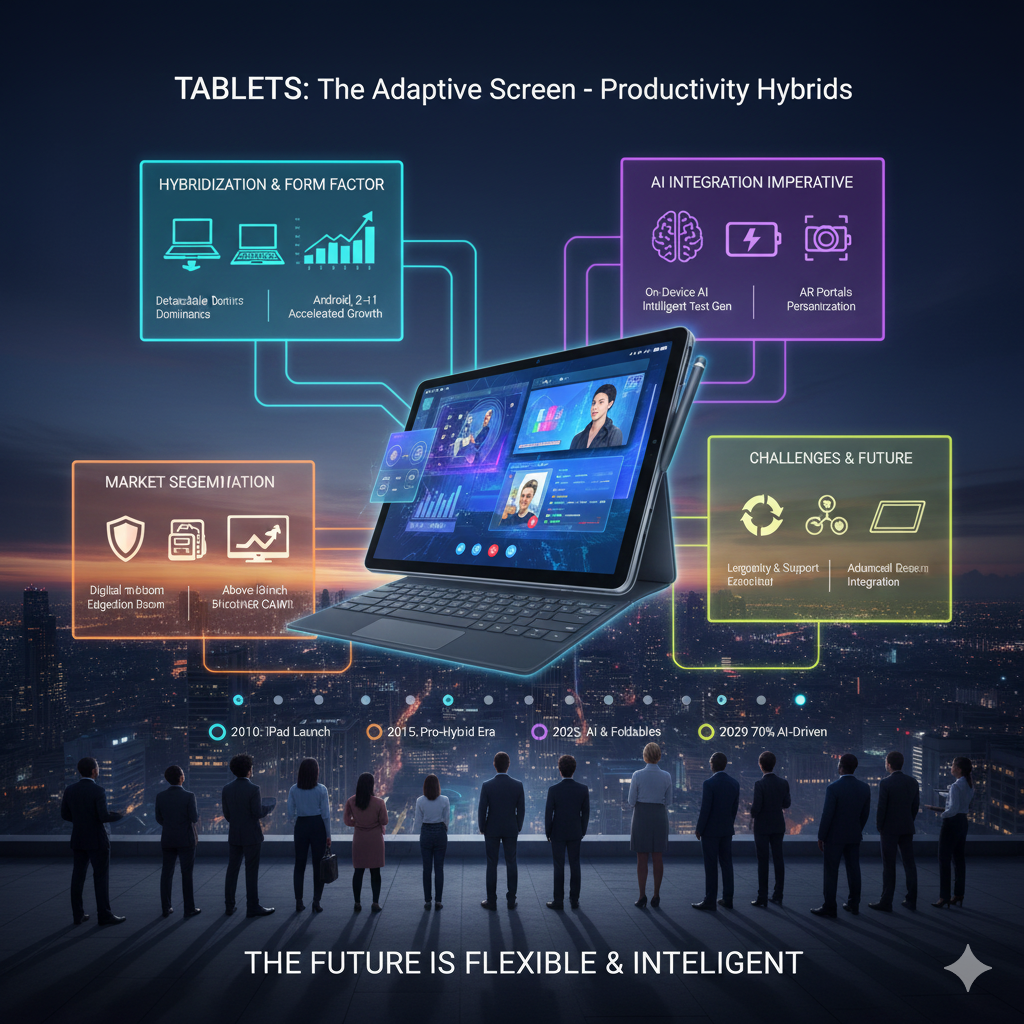
Once positioned primarily as content consumption devices, the tablet has undergone a profound strategic evolution. It has matured into a powerful, multifaceted Productivity Hybrid that blends the portability of a smartphone with the processing power of a laptop. The current market is defined by intense segmentation, a relentless focus on digital education, and the fundamental integration of on-device Artificial Intelligence (AI). The global market is projected to see strong growth, accelerating at a CAGR of over 5.5% through 2029, driven by these innovative shifts.
The Dominant Trend: Hybridization and the Detachable Form Factor
The most significant change in the tablet landscape is the rising dominance of devices designed to function as both a tablet and a PC.
- The Rise of Detachable Tablets: Users are demanding devices that can replace a laptop without sacrificing touch functionality. This has propelled the detachable tablet segment (such as the Microsoft Surface Pro and premium iPad Pro models) into a high-growth category. These hybrids, featuring integrated kickstands and magnetic keyboards, appeal strongly to professionals and students who need portability for remote work and learning. The demand for 2-in-1 models is so strong that the segment is experiencing accelerated growth.
- Operating System Competition: The market is dominated by three main operating systems, each catering to different segments:
- Android: Holds the largest market share (over 50%), largely due to its wide availability, affordability, and strong penetration in the education sector in developing regions.
- iOS (Apple): Maintains a strong lead in the premium segment, driven by brand loyalty and a powerful ecosystem ideal for creative professionals.
- Windows: Is witnessing the fastest growth due to its adoption in the enterprise sector, where full desktop productivity, seamless Microsoft Office integration, and robust security features are critical.
The AI Imperative: Smarter, More Personalized Devices
The next wave of tablet innovation centers on the integration of advanced AI capabilities, making devices more intuitive and personalized.
- On-Device AI for Optimization: AI is no longer just for cloud services; it’s being integrated directly into the tablet OS. AI dynamically optimizes battery life and resource allocation, ensuring that during intensive tasks like gaming, power is maximized, and during simple tasks like reading, consumption is minimized.
- Enhanced Productivity Features: AI overcomes traditional tablet input barriers. Features like intelligent text generation reduce reliance on soft keyboards, while AI can interpret complex stylus gestures or voice commands as precise creative inputs. For professionals, AI-powered systems (like those being implemented in Windows and Samsung’s ecosystem) can generate summaries, create to-do lists, and provide real-time suggestions within note-taking apps.
- Augmented Reality (AR) Portals: Tablets are becoming portals to intelligent, immersive universes. Coupled with advanced cameras and sensors, AI will enable tablets to recognize physical objects, provide real-time AR overlays for learning or design, and offer features like live language translation baked directly into the viewing scene.
Market Segmentation: Education and Enterprise Lead the Charge
While the consumer segment remains the largest end-user category, the most significant growth drivers are in specialized vertical markets.
- Digital Education Boom: Educational institutions are the most active segment driving tablet demand globally. Tablets are crucial for e-learning, interactive lessons, digital textbooks, and online testing, especially as governments and schools invest in devices to support remote and hybrid learning models. ChromeOS and affordable Android tablets are particularly strong in this area.
- The Rugged Tablet: The rugged segment is projected to witness the fastest CAGR. These highly durable, shock-resistant, and water-proof tablets are essential for field operations, logistics, construction, and healthcare, where they must withstand harsh industrial and outdoor environments.
- Screen Size Preference: The market shows a clear preference for larger screens, with the above 8-inch segment holding the largest revenue share, reflecting the increased use of tablets for productivity, creative work, and multimedia consumption.
Challenges and Future Focus
Despite strong growth, the tablet market faces challenges, primarily long consumer replacement cycles compared to smartphones. To counteract this, manufacturers are focusing on:
- Longevity and Support: Users are demanding longer software and security patch support to extend the usability and life of their devices.
- Ecosystem Integration: The future of tablets lies in creating seamless, cross-device ecosystems (like Apple’s Continuity or Samsung’s DeX) where the tablet acts as a dynamic second screen or a central hub for all other smart devices.
- Advanced Displays: OLED and AMOLED displays are gaining traction for their superior energy efficiency, vibrant colors, and suitability for creative work.
The tablet is no longer a secondary device; it is a complex, adaptive computing tool whose relevance is being cemented by its pivotal role in the future of AI-powered education and mobile enterprise productivity.


