

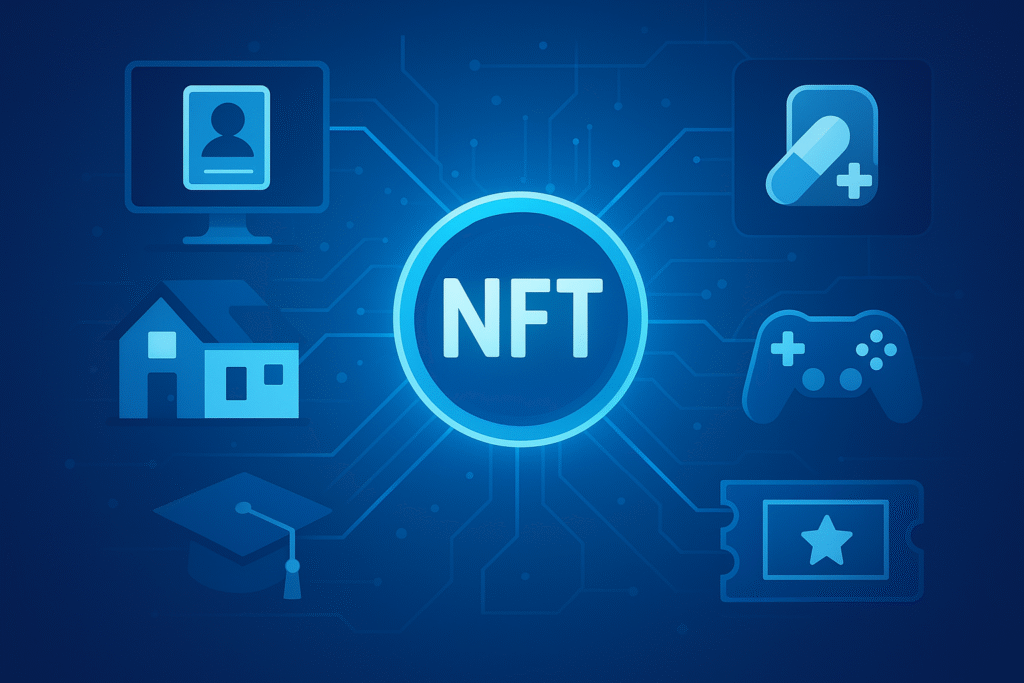
When Non-Fungible Tokens (NFTs) first hit the mainstream, they were best known for million-dollar digital artworks and collectible memes. But in 2025, the NFT landscape has grown far beyond art — now driving innovation across industries like real estate, healthcare, gaming, supply chain, and even education.
NFTs are no longer just about digital collectibles; they represent a revolution in ownership, authenticity, and digital identity.
What Exactly is an NFT?
An NFT (Non-Fungible Token) is a unique digital asset verified through blockchain technology. Unlike cryptocurrencies such as Bitcoin or Ethereum (which are “fungible” and identical in value), each NFT carries a distinct identity and metadata, making it one-of-a-kind.
This uniqueness allows NFTs to represent proof of ownership for digital and physical assets — from artwork and music to property and credentials.
The Evolution: From Digital Art to Utility NFTs
Early NFTs focused mainly on art and collectibles — digital images, GIFs, and virtual items. But in 2025, the focus has shifted toward utility-based NFTs, which provide real-world value and practical use cases.
These NFTs act as digital certificates, access passes, or even legal documents, creating a bridge between the physical and digital worlds.
Top Real-World Applications of NFTs in 2025
1. Real Estate and Property Ownership
NFTs are now being used to represent property deeds, rental agreements, and ownership titles. By tokenizing real estate, transactions become faster, cheaper, and more transparent.
- Smart contracts automate transfers once payments are verified.
- Ownership history can be tracked easily on the blockchain.
Example: Companies like Propy and RealT are already enabling NFT-based property sales globally.
2. Education and Certifications
Universities and online learning platforms are adopting NFTs to issue digital diplomas, certificates, and degrees that cannot be forged or lost.
- Employers can instantly verify a candidate’s credentials.
- Students maintain a permanent, verifiable digital record of achievements.
This adds trust and transparency to academic validation processes.
3. Identity and Access Management
NFTs now serve as digital IDs that verify personal identity without centralized databases.
- Used for secure KYC (Know Your Customer) verification.
- Acts as access passes for events, memberships, or exclusive communities.
Example: Some Web3 platforms allow NFT-based login instead of traditional usernames and passwords — a step toward a self-sovereign identity system.
4. Supply Chain and Product Authenticity
NFTs help brands and consumers trace the origin and authenticity of products.
- Each item is assigned a unique NFT that tracks its entire lifecycle.
- Ensures ethical sourcing and prevents counterfeiting.
Example: Luxury brands and pharmaceutical companies use NFTs to verify genuine products and combat fakes.
5. Gaming and Virtual Assets
NFTs are redefining the gaming industry with play-to-earn and own-to-earn models.
- Players can own in-game assets, such as skins, weapons, or land, and trade them freely.
- Assets remain with the player across multiple platforms and metaverses.
Example: Games like Axie Infinity, Decentraland, and The Sandbox use NFTs to empower players economically.
6. Ticketing and Event Management
Traditional tickets are easy to duplicate or resell fraudulently. NFT-based tickets ensure:
- Authenticity — each ticket is unique and verifiable.
- Enhanced experience — ticket holders may receive NFT collectibles or access perks.
Example: Major concerts and sports events in 2025 are using NFT tickets for entry and memorabilia.
7. Healthcare and Medical Data
NFTs are emerging in healthcare to securely store medical records, prescriptions, and health credentials.
- Patients own their data and can share it securely with hospitals.
- Enhances interoperability and reduces data misuse.
Blockchain-backed NFTs ensure sensitive health information remains private yet accessible to authorized providers.
Benefits of NFTs in the Real World
✅ Transparency — Every NFT transaction is traceable.
✅ Security — Blockchain ensures authenticity and tamper-proof ownership.
✅ Efficiency — Smart contracts automate processes and eliminate middlemen.
✅ Ownership Control — Users retain full rights over their digital assets.
Challenges Ahead
Despite rapid adoption, NFTs face challenges such as:
- Regulatory uncertainty surrounding NFT ownership laws.
- Environmental impact of some blockchain networks.
- Market speculation, leading to inflated or unstable prices.
- User education — many still don’t understand NFT utility beyond art.
The Future of NFTs
In 2025 and beyond, NFTs are evolving into digital building blocks of the Web3 ecosystem. With blockchain scalability improvements and growing enterprise adoption, NFTs will become a core part of identity, commerce, and digital interaction.
From verifiable degrees to tokenized real estate, NFTs are unlocking a future where ownership is digital, decentralized, and transparent.
Conclusion
NFTs have transcended the boundaries of art to become powerful tools for trust, security, and innovation. As more industries recognize their potential, NFTs will continue to shape how we verify, own, and interact in the digital age. The next time you hear “NFT,” think beyond art — think of the future of ownership itself.


