How Figma AI, Mid journey, and Adobe Firefly Are Redefining the Creative Workflow

Introduction: The Shift from Creator to Co-Creator
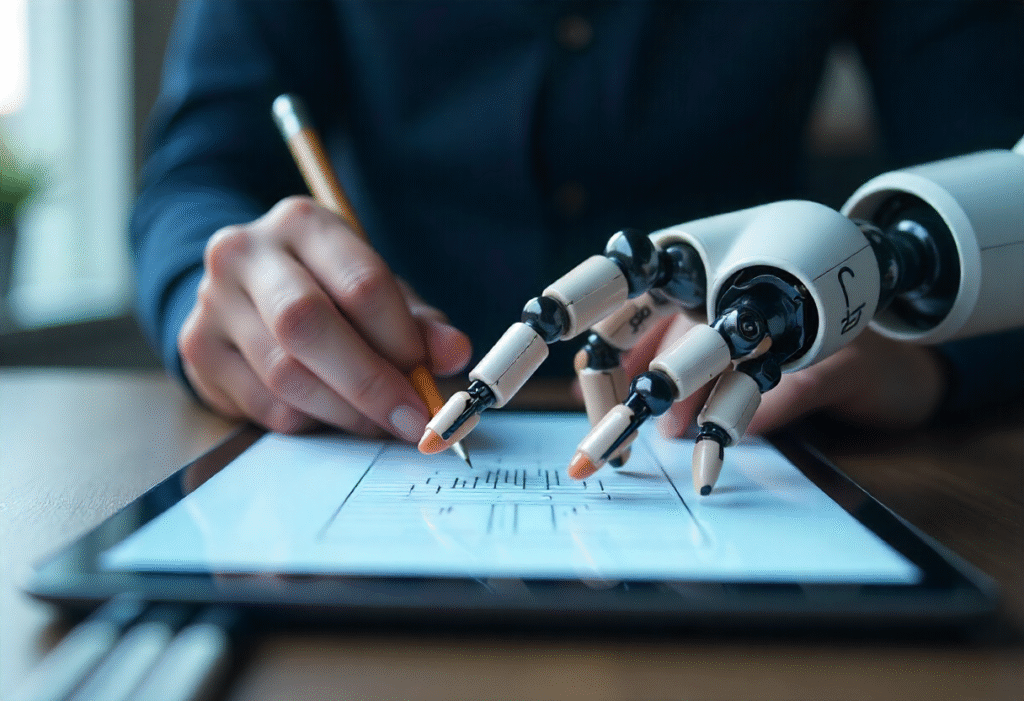
In 2025, the design world isn’t about working for AI — it’s about working with it. Designers today aren’t just pixel pushers; they’re creative directors guiding intelligent tools that understand aesthetics, predict trends, and even suggest layout improvements in real time. The partnership between human creativity and artificial intelligence has ushered in a new era — the co-creation era.
The Rise of AI-Powered Design Tools
Leading tools like Figma AI, Midjourney, and Adobe Firefly have become integral to every designer’s toolkit — but not because they replace creativity. Instead, they accelerate and expand it.
- Figma AI assists in ideation by auto-generating layouts, color systems, and even entire design systems based on a simple text prompt. Designers can refine these outputs, merging automation with human nuance.
- Midjourney turns imagination into visuals, helping designers explore moodboards, product mockups, and style variations in seconds — a process that used to take hours.
- Adobe Firefly integrates generative fill, smart recoloring, and AI-based concept generation right inside Photoshop and Illustrator, blurring the line between concept and execution.
From Ideation to Execution — Reinvented
The biggest shift lies in workflow. Designers now move from idea → concept → prototype in record time:
- Ideation: Start with a simple text or voice prompt in Figma AI to generate layout drafts.
- Visualization: Use Midjourney to explore the visual direction — colors, lighting, mood.
- Refinement: Bring those visuals into Firefly or Photoshop to fine-tune and experiment.
- Prototyping: Auto-generate interactive screens in Figma with AI-assisted transitions.
AI removes repetitive steps, letting designers focus on emotion, storytelling, and user empathy — the human side of design.
Creativity Reimagined: Humans + Machines
AI can analyze millions of visual patterns, but it still lacks intuition, humor, and empathy — the things that make design human. The real magic happens when designers use AI not as a shortcut, but as a creative sparring partner.
Think of AI as a brainstorming buddy that never runs out of ideas, but still needs your judgment to decide what feels right. It’s not replacing your creativity — it’s amplifying it.
What This Means for Designers in 2025
- Speed is the new skill. Designers who can quickly iterate with AI gain a huge edge.
- Prompting becomes a core design language. Knowing how to “speak AI” is just as vital as knowing color theory.
- The portfolio evolves. Case studies now include AI collaboration steps, showing how human direction guided machine output.
The Future of Co-Creation
The next wave of design won’t just be about beautiful interfaces — it’ll be about adaptive creativity, where AI learns your personal style and co-designs alongside you. As tools become more context-aware, designers will spend less time on the “how” and more on the “why” behind each experience.
The future of design isn’t artificial — it’s augmented.