
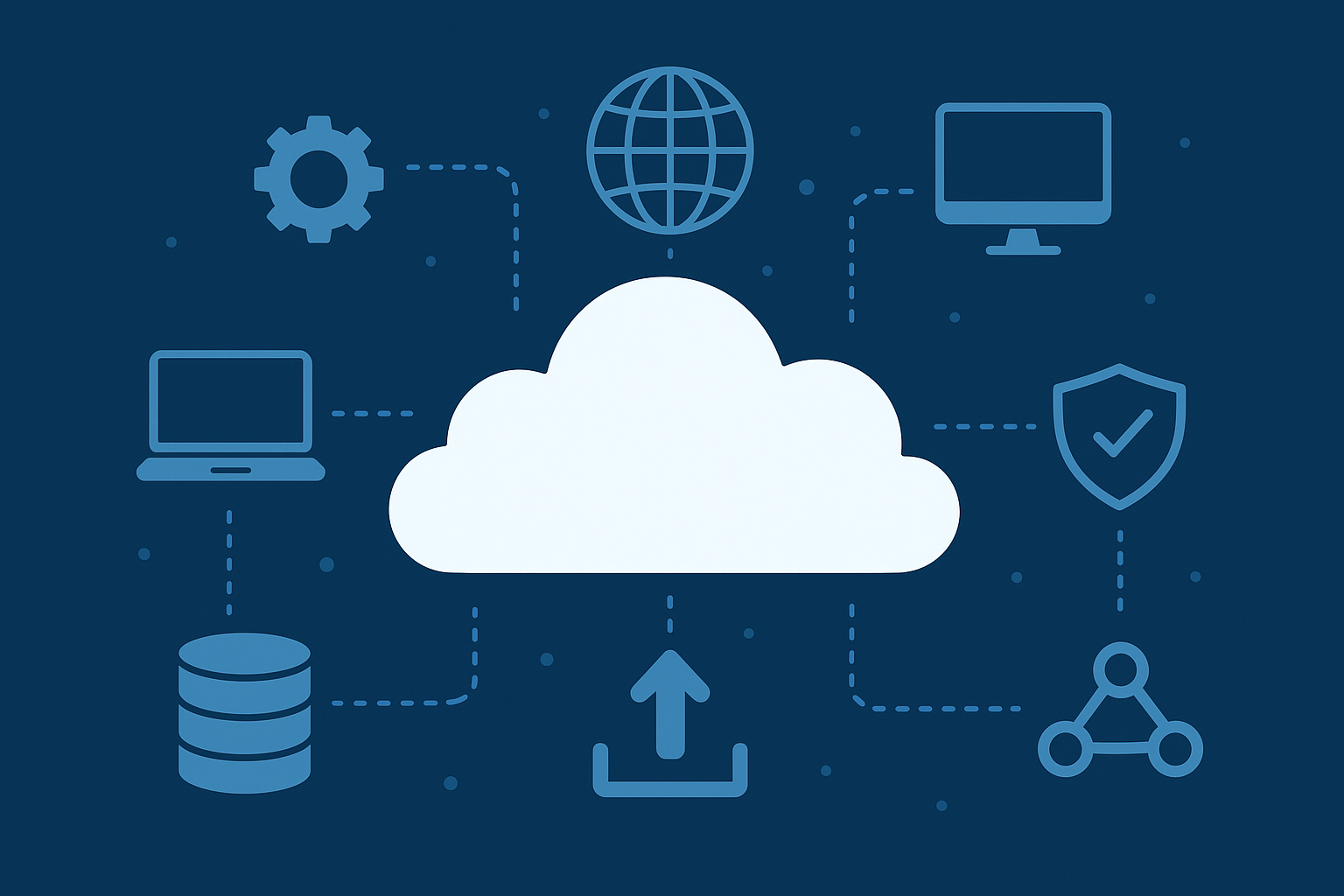
Cloud computing is no longer just an option—it’s the de facto foundation of digital transformation. Enterprises, startups, and governments rely on the cloud to scale applications, optimize costs, and accelerate innovation. However, the true power of cloud computing lies in its architectural models, emerging technologies, and evolving ecosystem.
Beyond Basics: What Cloud Really Means
At its core, cloud computing enables on-demand resource provisioning with elasticity, multi-tenancy, and automated management. But modern cloud adoption is not just about hosting—it’s about architecting distributed, secure, and resilient systems.
Some critical aspects include cloud-native design (building applications with microservices, APIs, and containers for scalability), automation and IaC (Infrastructure as Code) using tools like Terraform, Ansible, or AWS CloudFormation, and multi-cloud and hybrid strategies to avoid vendor lock-in while leveraging the strengths of different providers.
Advanced Cloud Service Models
IaaS (Infrastructure as a Service): Provides bare-metal provisioning and virtualization at scale. Examples include AWS EC2, Google Compute Engine, and Azure VMs. This model is best suited for enterprises needing flexibility over OS, runtime, and networking.
PaaS (Platform as a Service): Abstracts away infrastructure complexity, allowing developers to focus on applications. Popular platforms include Heroku, Google App Engine, and AWS Elastic Beanstalk.
SaaS (Software as a Service): Applications are hosted on the cloud and offered via subscription. Examples include Salesforce, Office 365, and Slack.
FaaS (Function as a Service) / Serverless: Event-driven, auto-scaling functions priced per execution. Services like AWS Lambda and Google Cloud Functions are best for real-time data processing, IoT backends, and microservices.
Cloud Architecture Best Practices
Modern architectures rely on microservices and containers orchestrated by Kubernetes for scalability. Observability becomes critical, with Prometheus, Grafana, and ELK stacks providing system visibility. Security must be implemented by design through zero-trust models, encryption, IAM, and compliance scanning. Continuous integration and deployment pipelines, powered by GitHub Actions, GitLab CI, or AWS CodePipeline, ensure rapid delivery and reliability.
Current Trends in Cloud Computing
Multi-cloud and hybrid strategies are now a norm, as organizations spread workloads across AWS, Azure, and GCP to achieve redundancy and cost optimization. AI and ML workloads run seamlessly with managed services such as AWS SageMaker, Azure AI, and Google Vertex AI. Edge computing is emerging to reduce latency by processing data closer to the source, powered by IoT and 5G. FinOps is becoming essential for cloud cost management with tools like Kubecost and CloudHealth. Serverless and event-driven architectures continue to grow for scalability and operational efficiency.
Cloud Security & Compliance
Enterprises must adopt a security-first strategy. This includes cloud-native firewalls and WAFs, identity federation and SSO standards like OAuth 2.0, SAML, and OpenID Connect, as well as strict adherence to data sovereignty and compliance regulations such as GDPR, HIPAA, and SOC 2. Advanced cloud security posture management tools like Prisma Cloud, Wiz, and Lacework are increasingly critical.
The Future of Cloud
The future of cloud will integrate quantum computing as a service, as companies like Google, AWS, and IBM explore quantum workloads. Green cloud computing initiatives will prioritize sustainability and energy efficiency. Decentralized cloud solutions using blockchain and Web3, such as Filecoin and Akash Network, are emerging as alternatives to centralized infrastructure. With 5G, cloud-native architectures will drive ultra-low latency applications and telecom innovation.
Conclusion
Cloud computing is evolving from infrastructure provisioning to intelligent, decentralized, and automated ecosystems. For IT professionals, the key lies in mastering cloud-native practices, multi-cloud strategies, and AI/edge integrations.
The future of the cloud is not just scalability—it’s intelligence, security, and global accessibility.