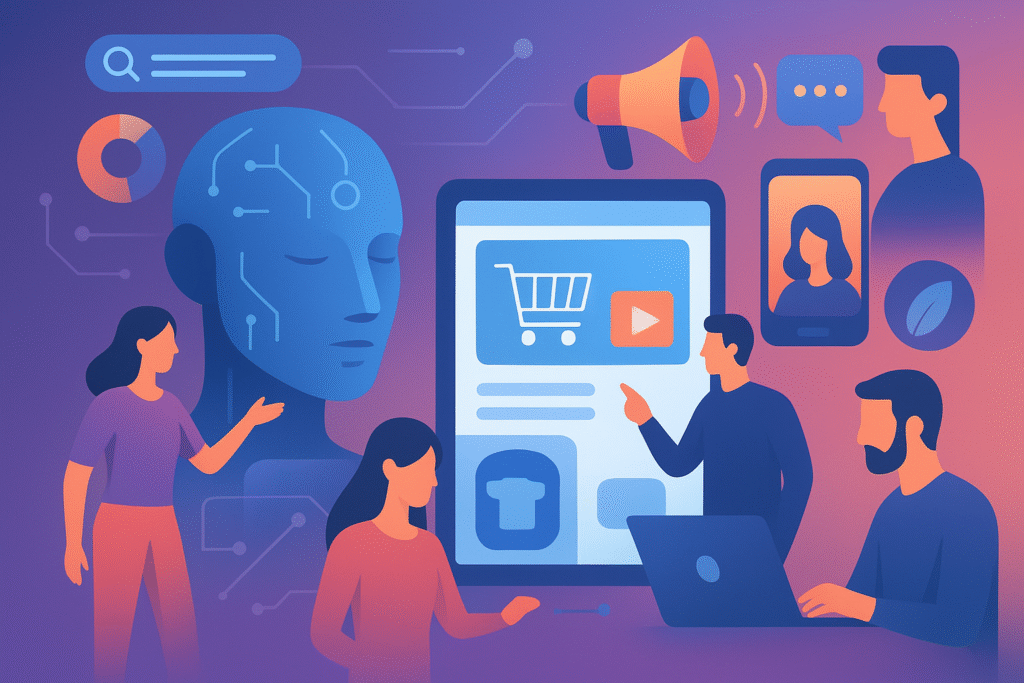
The digital marketing landscape in 2025 is smarter, more personalized, and deeply human-centered. With AI, data privacy laws, and immersive tech shaping the future, brands must evolve to stay relevant. Here’s a look at the top digital marketing trends that are defining 2025.
AI-Powered Personalization
Artificial Intelligence continues to transform digital marketing. In 2025, AI tools are helping brands predict what customers want even before they search for it.
From personalized product recommendations to dynamic ad targeting and intelligent chatbots, AI enables one-on-one marketing at scale.
- Predictive analytics helps forecast customer needs.
- AI-driven copywriting tools make campaigns faster and sharper.
- Chatbots deliver instant, natural customer interactions 24/7.
Insight: Businesses using AI personalization see higher conversion rates and stronger brand loyalty.
Authentic and Human-Centric Marketing
In a world full of automation, authenticity is the new currency. People are tired of overly polished content—they want real, relatable stories.
Brands focusing on human emotions, storytelling, and social impact are gaining massive traction.
- User-generated content (UGC) is trusted more than brand ads.
- Purpose-driven campaigns that reflect genuine values stand out.
Example: Brands that highlight employees, real customers, or community work see higher engagement.
Voice and Visual Search Optimization
Voice search is becoming a daily habit with Alexa, Siri, and Google Assistant leading the way. At the same time, visual search allows users to shop by snapping photos.
Optimizing for both means more ways for customers to discover you.
- Use conversational keywords for voice SEO.
- Add proper image tags, alt text, and structured data for visual SEO.
Tip: Think “how people speak” rather than “how they type.”
The Rise of Micro-Influencers
Mega influencers are taking a backseat to micro and nano influencers with niche, loyal audiences.
These creators build deeper trust with their followers and often drive better results for smaller budgets.
- Micro-influencers (10k–100k followers) offer high engagement rates.
- Long-term collaborations feel more authentic and natural.
Strategy: Focus on relationships, not reach.
AR & VR Marketing Experiences
The future of digital marketing is immersive. Augmented Reality (AR) and Virtual Reality (VR) let consumers interact with products before purchase.
- AR “try-on” features for fashion, eyewear, and beauty brands.
- VR showrooms for real estate, tourism, or automotive experiences.
Example: IKEA’s AR app allows users to visualize furniture in their homes before buying.
Data Privacy and Ethical Marketing
With tighter regulations like GDPR updates and growing user awareness, privacy-first marketing is crucial.
Marketers are moving toward first-party data and transparent consent systems.
- Customers now expect brands to explain how data is used.
- Trust and transparency directly influence buying decisions.
Best practice: Offer real value in exchange for data—like personalized recommendations or loyalty rewards.
Sustainability and Green Branding
Today’s consumers care about the planet. Brands that embrace eco-friendly practices and sustainability are gaining attention and respect.
- Highlighting green initiatives builds trust and emotional connection.
- Avoid “greenwashing”—be transparent and honest about your efforts.
Tip: Share measurable goals (e.g., carbon reduction, eco-packaging).
Final Thoughts
2025 is redefining digital marketing as a blend of technology, emotion, and ethics. AI and automation make campaigns efficient, but empathy and authenticity make them memorable.
Brands that combine innovation with integrity will lead the digital era—creating connections that last far beyond a single click.