
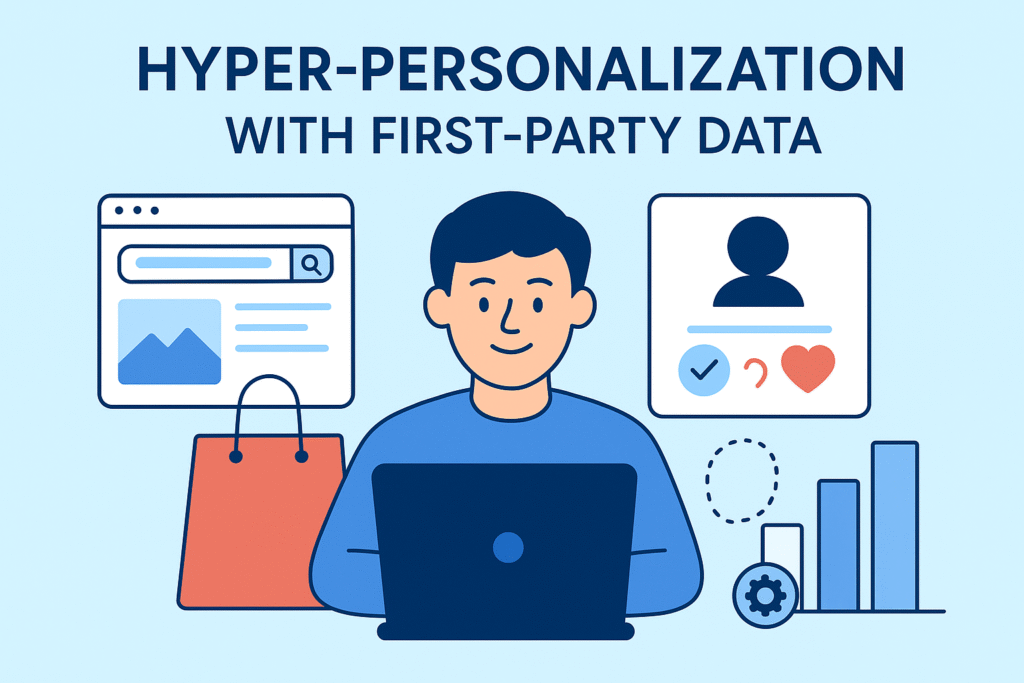
In 2025, digital marketing is experiencing a powerful shift. With the decline of third-party cookies and the rise of privacy-first regulations, businesses can no longer rely on external data to understand their audience. Instead, marketers are turning to a more reliable and ethical resource: first-party data.
But collecting data is only half the story. The real game-changer is hyper-personalization—using customer insights to deliver tailored experiences that feel unique to each user. From personalized product recommendations to custom email flows, hyper-personalization is quickly becoming the gold standard in marketing.
What is Hyper-Personalization?
Hyper-personalization is the practice of using real-time data, AI, and behavioral insights to deliver highly relevant and individual experiences. Unlike traditional personalization (such as addressing someone by their first name in an email), hyper-personalization digs deeper:
- Suggesting products based on past purchases.
- Showing dynamic website banners based on browsing history.
- Sending predictive recommendations before the customer even asks.
In short, it’s marketing that feels like a 1:1 conversation with your customer.
Why Hyper-Personalization Matters in 2025
- Cookie Phase-Outs – Google and other browsers are phasing out third-party cookies. Brands must rely on their own customer data.
- Customer Expectations – Today’s users expect experiences that feel personal, not generic. If your brand doesn’t deliver, they’ll go to one that does.
- AI-Powered Tools – Machine learning now makes it possible to process massive datasets and predict customer needs with accuracy.
- Higher ROI – Studies show that personalized campaigns significantly increase click-through rates, conversions, and customer retention.
Building a First-Party Data Strategy
To succeed with hyper-personalization, businesses need a strong first-party data framework:
- Website & App Behavior Tracking: Monitor clicks, searches, purchases.
- Surveys & Forms: Directly collect customer preferences.
- Loyalty Programs: Encourage sign-ups and reward data sharing.
- CRM & Email Systems: Store and segment customer data effectively.
Transparency is key—customers are more willing to share their data if they trust you and understand how their information will be used.
How Hyper-Personalization Works in Practice
Here’s how businesses are already applying it in 2025:
- E-commerce: AI recommends outfits, gadgets, or skincare routines based on purchase history.
- Streaming Services: Netflix-style content suggestions powered by user viewing patterns.
- Email Marketing: Personalized subject lines, dynamic product blocks, and offers unique to each customer.
- Advertising: Contextual and predictive ads that match a user’s behavior and intent.
Challenges to Consider
While hyper-personalization is powerful, it comes with challenges:
- Privacy Concerns: Over-personalization can feel invasive. Balance is essential.
- Data Compliance: Regulations like GDPR and CCPA require strict data handling.
- Technical Barriers: Businesses need AI tools, clean data pipelines, and skilled teams.
The key is to personalize with empathy—providing value without crossing into “creepy” territory.
Actionable Steps for Marketers in 2025
- Audit Data Sources – Identify where you’re collecting first-party data.
- Segment Customers – Create meaningful groups based on behavior and demographics.
- Invest in AI Tools – Use predictive analytics for smarter campaigns.
- Test & Optimize – Start small (emails or product recommendations) and scale.
- Measure Success – Track engagement, conversions, and customer satisfaction.
Conclusion
In 2025, hyper-personalization powered by first-party data is more than a marketing trend—it’s a survival strategy. As privacy rules tighten and AI transforms digital experiences, businesses that master personalization will stand out, win customer loyalty, and see higher ROI.