

Meta’s Bold Push: AI to Drive the Future of the Metaverse
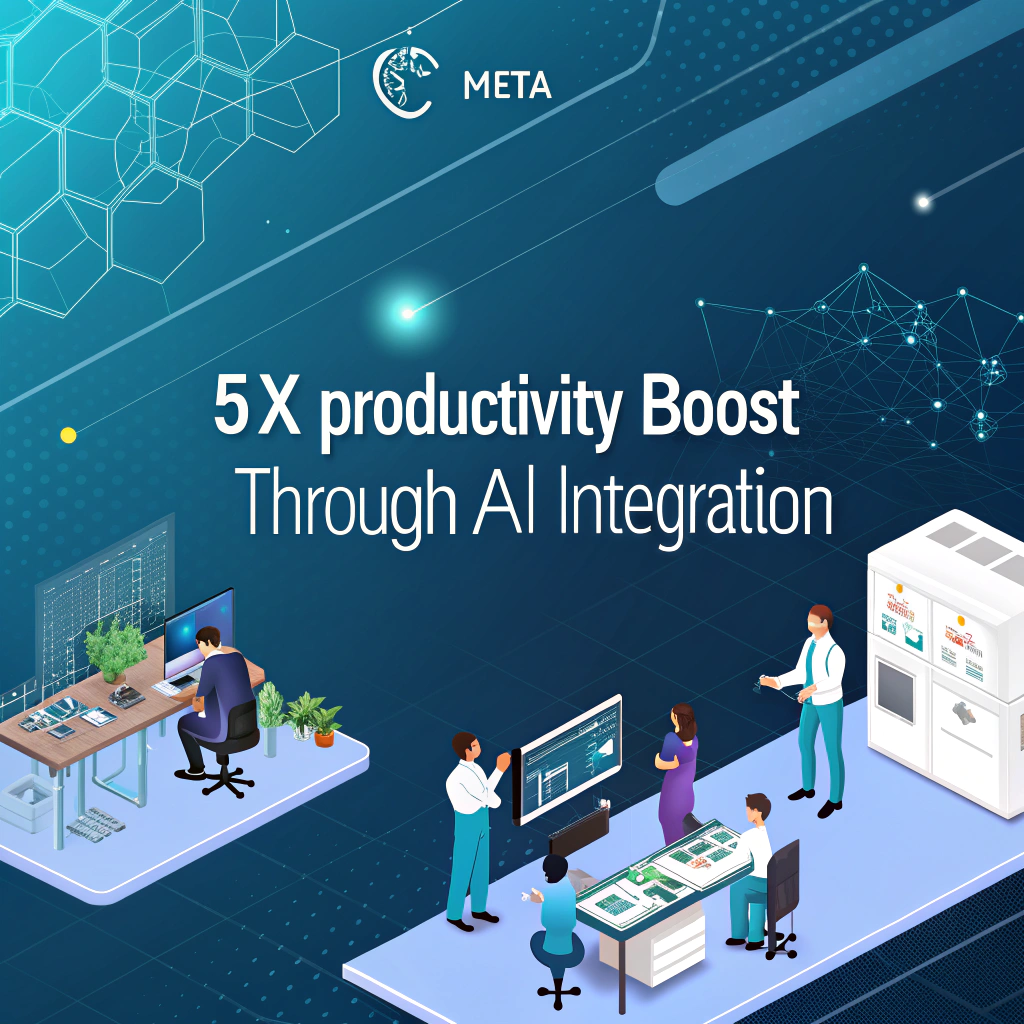
Meta is ramping up efforts to breathe new life into its Metaverse division, with an ambitious directive to multiply productivity fivefold through artificial intelligence (AI).
According to internal communications obtained by 404 Media, Vishal Shah, Meta’s Vice President of Metaverse, has instructed employees to “Think 5x, not 5%” — signaling a dramatic shift in how the company’s virtual reality teams operate.
This initiative marks Meta’s renewed attempt to revitalize its once high-profile Metaverse project by embedding AI into every stage of its workflow — from design and development to testing and innovation.
AI Becomes a Daily Habit for Meta Employees
In his internal message, Vishal Shah emphasized a cultural transformation across Meta’s Metaverse division.
“Our goal is simple yet audacious: make AI a habit, not a novelty,” he said.
Shah has set a clear target — by the end of the year, 80% of the Metaverse team should be using AI tools in their daily tasks.
This applies not only to engineers but also to project managers, designers, and product developers, who are being urged to leverage AI for:
- Prototyping and design ideation
- Debugging and optimization
- Accelerating innovation cycles
By weaving AI into everyday workflows, Meta aims to transform its Metaverse operations into a high-efficiency ecosystem where tasks that once took weeks can now be completed within hours.
From Metaverse to AI Integration: A Strategic Shift
Meta’s Metaverse ambitions, which once dominated its corporate vision following the company’s 2021 rebrand, have faced consistent challenges.
Despite investing nearly $50 billion into its Reality Labs division, the company has struggled to achieve mainstream adoption of its VR products and digital worlds.
Now, instead of scaling back, Meta is restructuring its strategy — turning to AI integration as the key to unlocking productivity and creativity.
Shah’s memo outlines a clear objective:
“Achieving a fivefold productivity boost means rethinking how we work, build, and innovate.”
This means shorter feedback loops, faster iterations, and cross-functional collaboration powered by AI tools. Meta hopes that the convergence of AI and Metaverse technologies will redefine both virtual interaction and digital creation.
Meta’s Larger AI Push
The AI-first shift in the Metaverse division aligns with Meta’s broader company-wide AI transformation.
Across the organization, Meta is expanding its AI research, infrastructure, and workforce, competing directly with industry leaders like OpenAI, Google DeepMind, and Anthropic.
A Meta spokesperson confirmed that AI adoption is now a core internal initiative:
“We’re focused on using AI to help employees with their day-to-day work.”
CEO Mark Zuckerberg has also reinforced this direction, revealing earlier this year that AI agents could handle most of Meta’s coding tasks within 12 to 18 months.
This signals a historic shift in Meta’s operations — from a social and VR company to an AI-centric innovation powerhouse.
A New Era for the Metaverse
The integration of AI into Meta’s Metaverse division represents more than a workflow change — it’s a reimagining of the company’s original dream.
By enabling faster development, smarter design, and seamless collaboration, AI could be the key to unlocking the immersive digital worlds Meta envisioned years ago.
Still, questions remain:
- Can AI truly deliver a 5X productivity increase?
- Will this renewed push restore investor and public confidence in the Metaverse vision?
While the answers are yet to unfold, one thing is clear — Meta’s future now belongs as much to AI as it does to the Metaverse.
Conclusion: Meta’s AI-Driven Metaverse Revolution
Meta’s latest internal directive marks a transformational moment in its corporate journey. With Vishal Shah’s AI-first mandate, the company isn’t just trying to recover its footing in the Metaverse — it’s redefining how digital innovation happens.
If successful, Meta could become the first major tech company to prove that AI-driven creativity can accelerate the creation of entire virtual worlds — not in decades, but in months.


