
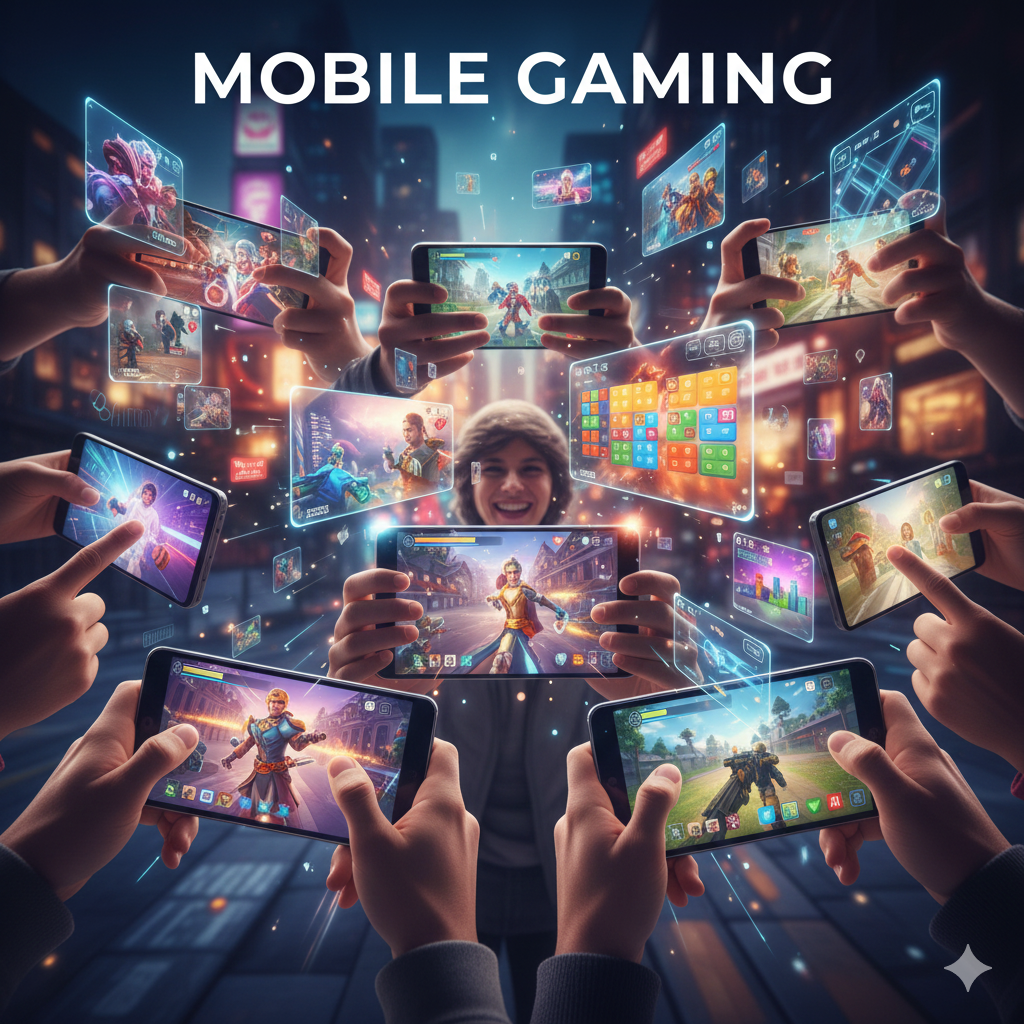
Once considered a casual pastime, Mobile Gaming has exploded into a global phenomenon, becoming the largest and fastest-growing segment of the video game industry. From quick puzzle breaks on the bus to immersive RPGs on a tablet, smartphones and tablets have transformed into powerful gaming devices, making gaming more accessible to more people than ever before.
The Evolution of Gaming in Your Pocket
Mobile gaming has come a long way from simple pixelated snake games:
- Casual Beginnings: Early mobile games were often simple, touch-based diversions like Angry Birds or Candy Crush Saga, perfect for short bursts of play.
- Technological Leap: As smartphones became more powerful with advanced processors, better screens, and sophisticated touch interfaces, the complexity and fidelity of mobile games soared.
- AAA Experiences: Today, mobile platforms host graphically impressive titles that rival console games, including versions of Genshin Impact, Call of Duty Mobile, PUBG Mobile, and even native iOS/Android ports of console/PC games.
- Free-to-Play Dominance: The free-to-play model, often monetized through in-app purchases (IAPs) and advertisements, became the standard, lowering the barrier to entry for millions.
Why Mobile Gaming Reigns Supreme
Several factors contribute to mobile gaming’s massive appeal and market dominance:
- Unmatched Accessibility: Almost everyone owns a smartphone. This ubiquitous device eliminates the need for dedicated gaming hardware, making gaming instantly available to billions.
- Convenience and Portability: Mobile games can be played anytime, anywhere—during commutes, waiting in line, or simply relaxing at home. The ability to pick up and put down a game instantly fits perfectly into modern lifestyles.
- Diverse Game Library: The sheer volume and variety of games available on app stores are staggering. From hyper-casual to hardcore strategy, RPGs, puzzles, and augmented reality (AR) experiences like Pokémon GO, there’s a game for every taste.
- Innovation in Control: While touchscreens were initially a limitation, developers have innovated with intuitive swipe, tap, and tilt controls, creating entirely new gameplay mechanics. External controllers are also widely supported for more traditional experiences.
- Social Connectivity: Mobile games often incorporate robust social features, allowing players to connect with friends, join guilds, or compete globally, fostering vibrant online communities.
- Cost-Effective Entry: Most mobile games are free to download, relying on optional in-app purchases or ads. This “try before you buy” model allows players to explore a vast library without upfront investment.
Key Trends Shaping the Future of Mobile Gaming
The mobile gaming landscape continues its rapid evolution:
- Cloud Gaming Integration: Services like Xbox Game Pass Ultimate and NVIDIA GeForce NOW allow users to stream high-end console and PC games directly to their mobile devices, blurring the lines between platforms.
- Augmented Reality (AR) Gaming: Games like Pokémon GO demonstrate the power of overlaying digital content onto the real world, creating interactive and location-based experiences.
- Esports on Mobile: Competitive mobile gaming is a huge phenomenon, especially in Asia, with major tournaments for titles like PUBG Mobile and Mobile Legends: Bang Bang.
- Cross-Platform Play: More mobile games are enabling cross-play with PC and console users, creating larger player pools and unified gaming ecosystems.
- Hardware Advancements: Dedicated gaming phones with enhanced cooling, faster refresh rate screens, and customizable controls cater to the growing segment of serious mobile gamers.
Mobile gaming is more than just a passing fad; it’s a testament to how technology can democratize entertainment and bring joy to billions. It has carved out its own unique space in the gaming world, offering quick thrills and deep engagements right in the palm of your hand.