

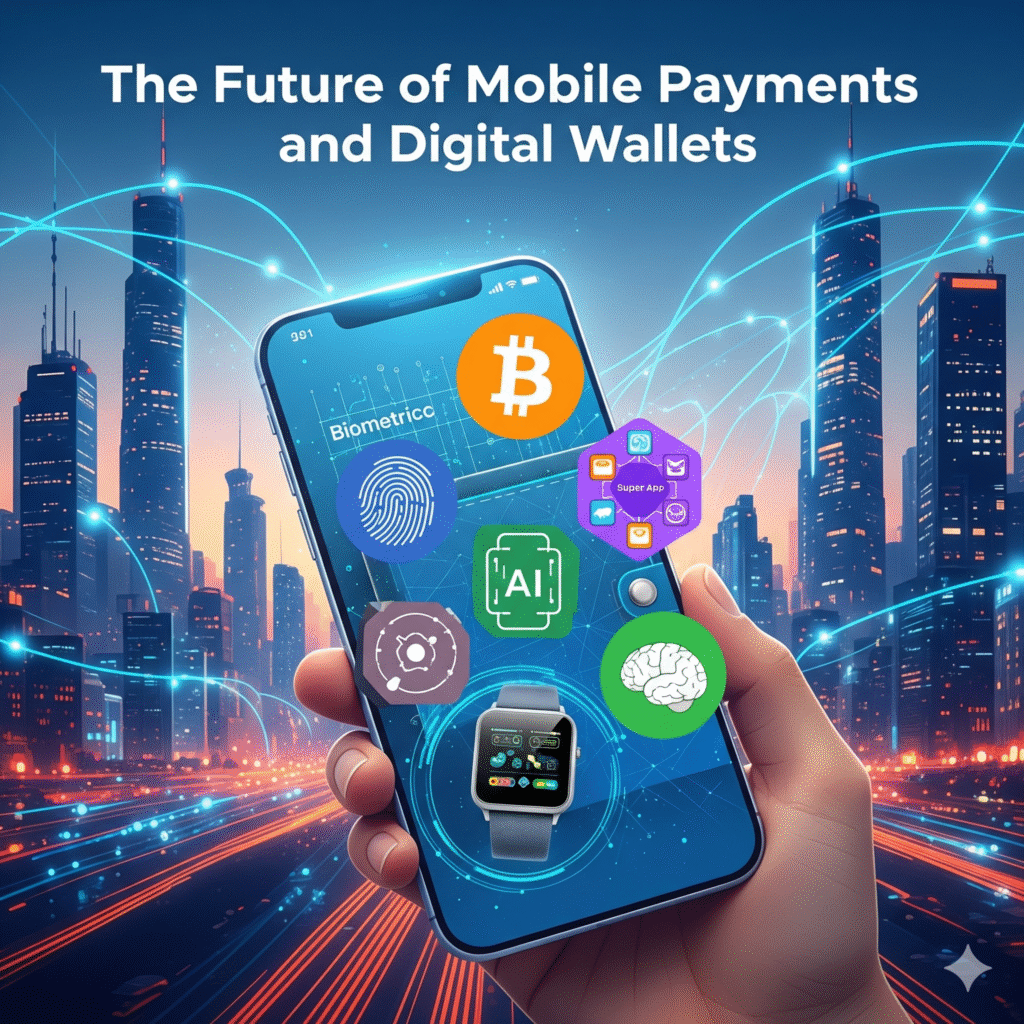
In just a few years, mobile payments and digital wallets have moved from being a convenience to becoming an everyday necessity. From tapping your phone at a grocery store to sending money instantly across borders, the way we pay has transformed dramatically. As we step further into a cashless economy, it’s worth exploring what the future holds for mobile payments and digital wallets.
Why Mobile Payments Are Growing
- Convenience: People now expect transactions to be quick, seamless, and available 24/7.
- Security: Features like biometric authentication (fingerprint, Face ID) and tokenization have boosted trust.
- Global Shift: Governments and businesses are encouraging digital-first economies to reduce cash dependency.
According to industry reports, global mobile payment transaction value is expected to surpass $9 trillion by 2026—showing just how fast adoption is accelerating.
Key Trends Shaping the Future
1. Biometric Payments Become Mainstream
Fingerprint scans, voice recognition, and even iris scans will increasingly replace passwords and PINs. These features promise more security and a smoother payment experience.
2. Cryptocurrency Integration
With digital wallets like PayPal, Coinbase, and Cash App already supporting Bitcoin and other cryptocurrencies, expect more wallets to integrate crypto payments as governments explore Central Bank Digital Currencies (CBDCs).
3. AI-Powered Smart Wallets
Artificial Intelligence will make wallets smarter—analyzing spending habits, offering budgeting insights, and even suggesting ways to save money while you shop.
4. Contactless & Wearables
Beyond smartphones, payments will spread across smartwatches, AR glasses, and IoT devices. Imagine paying for your morning coffee with a simple wrist gesture.
5. Super Apps for Everything
Apps like WeChat and Grab already combine messaging, shopping, and payments in one place. The future will see more all-in-one apps where payments are just one feature of a larger lifestyle ecosystem.
Challenges Ahead
- Cybersecurity threats: As more money goes digital, hacking attempts will grow.
- Global interoperability: Not all payment systems work across countries yet.
- Digital divide: People without smartphones or internet access risk being left behind.
What This Means for Businesses and Consumers
- For Businesses: Offering multiple digital wallet options will no longer be optional—it will be expected. Businesses must invest in secure, seamless mobile payment experiences.
- For Consumers: Expect more freedom, flexibility, and personalization in how you pay. Your digital wallet will likely become your primary financial hub.
Conclusion
The future of mobile payments and digital wallets points toward a world where cash and even physical cards become obsolete. With advancements in biometrics, AI, and cryptocurrency, the wallet of tomorrow won’t just be a place to store money—it will be a smart financial assistant in your pocket.
As we move forward, one thing is clear: the way we pay will never be the same again.


