

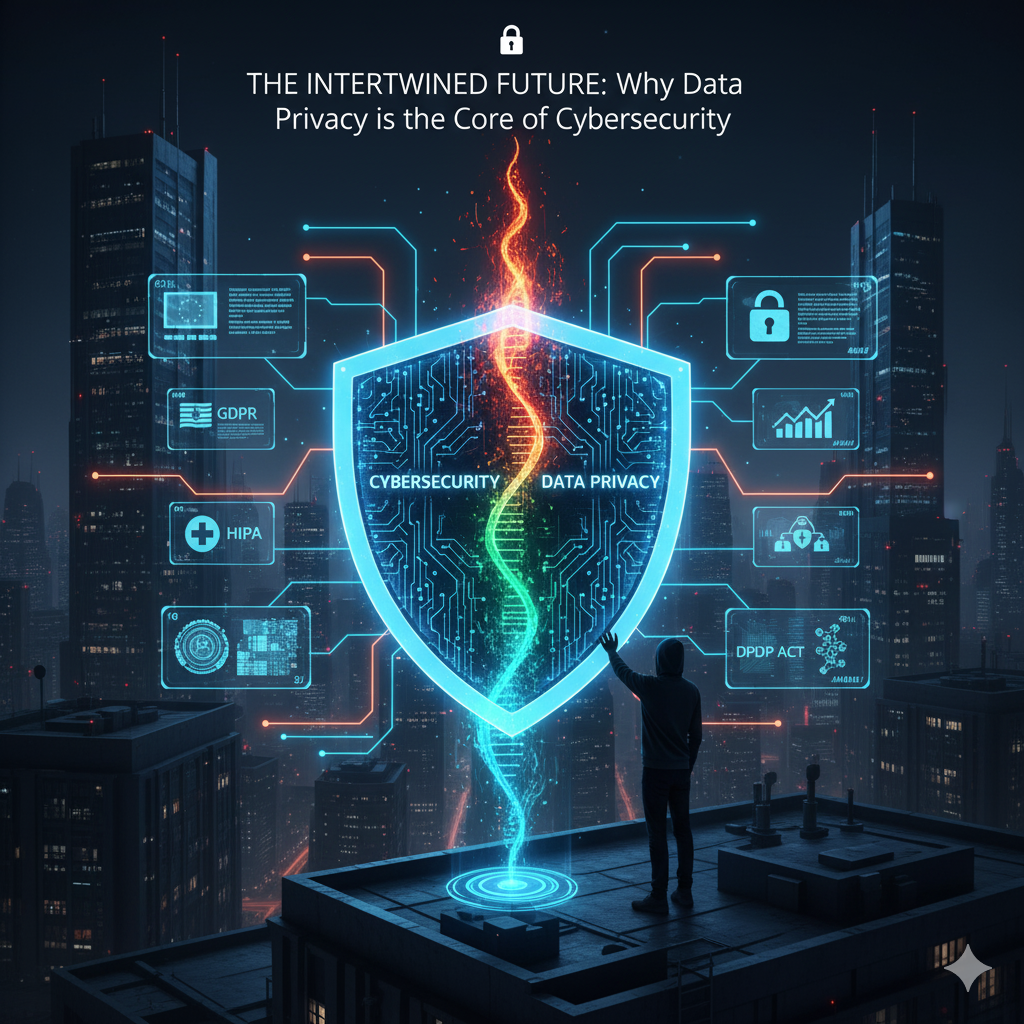
In the digital world, data is the new currency. But just like any valuable asset, it needs both a vault and a set of rules for handling it. This is where Cybersecurity and Data Privacy come together. While often confused, these two concepts are not the same; they are two sides of the same essential coin, and you cannot have one without the other.
Understanding the Difference: Security vs. Privacy
To navigate the digital landscape safely, it’s crucial to understand the distinct, yet symbiotic, roles of security and privacy:
| Feature | Data Privacy | Cybersecurity (Data Security) |
| Primary Focus | The right to control personal information: who can access data and how it’s used. (The Ethical/Legal Use) | The methods to protect data from unauthorized access, theft, or corruption. (The Technical Protection) |
| Key Question | Do I have the right to use this data? Is this use ethical and compliant? | Are the tools (encryption, firewalls) in place to keep the data safe? |
| Goal | To ensure responsible, transparent, and lawful handling of data. | To maintain the Confidentiality, Integrity, and Availability (CIA) of data. |
Export to Sheets
In short: Cybersecurity ensures data is protected; Data Privacy ensures protected data is used correctly.
The Crucial Role of Privacy in Cybersecurity
A strong cybersecurity program is only truly effective if it is built on a foundation of respect for data privacy. Here’s why privacy is not a mere compliance hurdle, but an operational necessity:
1. Minimizing the Attack Surface (Data Minimization)
Data privacy principles mandate data minimization—only collecting and retaining the data that is absolutely necessary for a specified purpose.
- Cybersecurity Benefit: The less personal or sensitive data an organization stores, the smaller the potential blast radius of a breach. If hackers steal data that was never collected, the damage is zero. This simple principle significantly reduces the overall attack surface.
2. Upholding Regulatory Compliance (GDPR, CCPA, DPDP Act)
The global landscape is governed by strict laws like the EU’s GDPR, California’s CCPA, and India’s DPDP Act. These laws impose significant fines for both security failures (breaches) and privacy failures (misusing data, failing to get consent).
- Cybersecurity Benefit: Compliance acts as a mandatory security roadmap. To satisfy privacy laws, organizations must implement key security measures by default, such as encryption, robust access controls, and mandatory breach notification procedures.
3. Building and Maintaining Trust
In a data-driven economy, trust is the most valuable asset. If customers do not trust a company to protect their personal information, they will simply take their business elsewhere.
- Cybersecurity Benefit: When an organization is transparent about its data practices (a privacy requirement) and invests in strong defenses (a security requirement), it builds user confidence. This high level of trust is critical for sustainable growth and reputation management.
4. Enhancing Protection by Design (Privacy by Design)
Modern privacy mandates the concept of Privacy by Design, meaning that privacy controls must be built into the system architecture from the very first step, rather than being patched on later.
- Cybersecurity Benefit: This requires security professionals to think proactively. Techniques like pseudonymization and tokenization—where sensitive data is masked or replaced—become core features, making the data itself less valuable and harder to exploit, even if the security perimeter is breached.
Practical Steps for a Unified Approach
For any organization, ensuring a seamless integration of privacy and security requires a coordinated strategy:
- Map Your Data: Conduct a thorough audit to know exactly what personal data you have, where it’s stored, why you have it, and who has access to it.
- Enforce Strict Access Controls: Implement the Principle of Least Privilege (PoLP), ensuring employees only have access to the data strictly necessary for their role.
- Encrypt Everything Sensitive: Use strong encryption for data both at rest (in storage) and in transit (when being sent across networks). If encrypted data is stolen, it is rendered useless to the attacker.
- Regular Training: Cybersecurity is a people problem. Regularly train all employees on both security best practices (recognizing phishing, using strong passwords) and privacy policies (handling consent, proper data disposal).
Data privacy and cybersecurity are no longer separate departments; they are one critical function. By placing the ethical and legal handling of data (Privacy) at the heart of our technical defense strategies (Cybersecurity), we build a more resilient, trustworthy, and secure digital world.


