

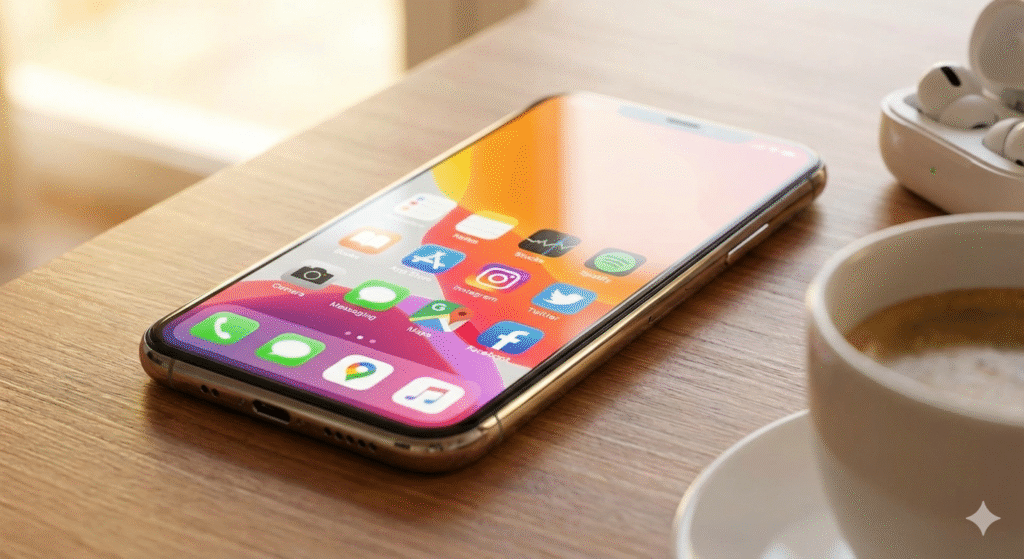
The smartphone is no longer just a “mobile phone”—it has officially transitioned into a personal AI agent, a professional-grade cinema studio, and a modular piece of technology designed to last a decade. As we move into 2026, the industry is breaking away from the design plateau of the early 2020s, driven by a “perfect storm” of autonomous AI, radical new form factors, and strict sustainability mandates.
I. The Rise of “Agentic” AI: Your Phone Now Acts for You
The biggest software shift in a generation is the move from Generative AI (which writes text) to Agentic AI (which takes action). In 2025, we saw the arrival of “co-pilots,” but 2026 is the year of the “Digital Butler.”
- Proactive Autonomy: Instead of you opening three apps to book a trip, your phone’s AI agent can now perceive a flight cancellation notification, reason through your calendar, and autonomously rebook a flight and hotel before you even pick up the device.
- On-Device Sovereignty: Driven by privacy concerns and the power of new NPUs (Neural Processing Units) like the Snapdragon 8 Gen 5 and Apple A19, these agents run locally. This means your personal data never leaves the device, making AI assistance both faster and more secure.
- Contextual Awareness: By analyzing real-time signals—location, biometrics, and usage patterns—the phone anticipates needs. If you’re at the gym, it doesn’t just suggest music; it opens your workout log and adjusts your smart home’s cooling for your arrival.
II. Form Factor 2.0: The Tri-Fold and the “Air” Era
Hardware design is seeing its most creative period in years as manufacturers try to reignite a plateauing market.
| Trend | Key Innovation | Major Players |
| Tri-Fold Devices | Screens that fold twice into a Z-shape, turning a phone into a full 10-inch tablet. | Samsung (Galaxy Z Tri-Fold), Huawei |
| Ultraslim “Air” Models | A new category of extremely thin, lightweight flagships that prioritize aesthetics and portability. | Apple (iPhone 17 Air), Samsung |
| Under-Display Cameras (UDC) | Sensors hidden entirely beneath the pixels, offering a truly edge-to-edge “uninterrupted” display. | Xiaomi, ZTE, and premium Samsung models |
| Apple’s Foldable Debut | The long-rumored “iPhone Fold” is projected for late 2026, expected to redefine the premium segment. | Apple |
III. Battery & Cooling: The Silicon-Carbon Revolution
As AI processes more data on-device, heat and power consumption have become the new bottlenecks.
- Silicon-Carbon Batteries: We are seeing a move away from traditional Lithium-Ion toward Silicon-Carbon anodes. These allow for much higher energy density, enabling 6,000mAh or even 10,000mAh batteries in devices that aren’t significantly thicker than today’s phones.
- Active Cooling: Flagship phones are increasingly adopting Vapour Chamber (VC) cooling systems—previously reserved for gaming PCs—to prevent AI “thermal throttling” during intense tasks.
- Extreme Fast Charging: While 65W to 100W is becoming the global standard, AI now manages the charging curves to ensure that battery health doesn’t degrade despite the high wattage.
IV. The “Right to Repair” Becomes Law
2025 marked a turning point for sustainability with the full implementation of the EU Ecodesign Directive. This is forcing a global shift in how phones are built.
- Repairability Scores: All phones sold in the EU now carry an A-E repairability label, similar to energy ratings on fridges. This scores devices on disassembly depth and the availability of tools.
- 7-Year Life Cycle: Manufacturers are now mandated to provide spare parts (screens, batteries, cameras) for at least seven years after a model is discontinued.
- Software Longevity: Samsung and Google have paved the way with 7-year update promises, and Apple is expected to formalize similar long-term support to compete with the rising “circular economy” of refurbished devices.
V. Market Outlook: The New Hierarchy
For the first time in over a decade, the “leaderboard” is shifting. Apple is projected to surpass Samsung in total global shipments by the end of 2025, driven by massive demand for the iPhone 17 series and its new “Air” model. Meanwhile, Google’s Pixel line is the fastest-growing major brand, leveraging its “AI-first” identity to capture users tired of traditional hardware-focused marketing.


