
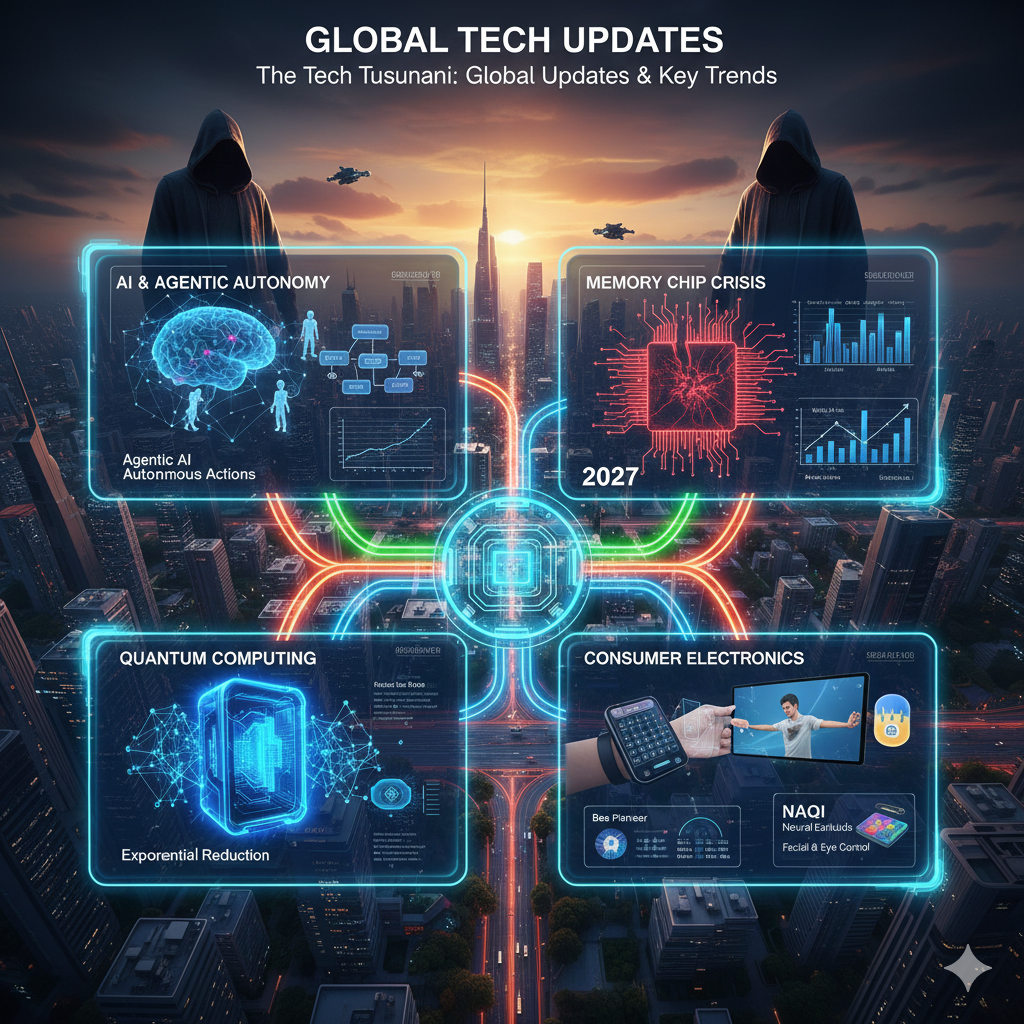
The global technology landscape is currently undergoing a period of intense acceleration, marked by a handful of transformative trends that are reshaping industries and consumer experiences worldwide. The convergence of advanced AI, infrastructure constraints, and evolving consumer electronics defines the current technological narrative.
The AI and Agentic Autonomy Boom
Artificial Intelligence remains the single most dominant force in global tech, shifting from simple tools to highly autonomous systems.
- Generative AI Expansion: Major players like Google are rapidly rolling out their latest models, such as Gemini 3 Pro and Nano Banana Pro, across international markets. This expansion enables complex reasoning, multimodal understanding (handling text, code, and visuals), and new generative user interfaces that can create dynamic visual layouts and interactive tools on the fly.
- Agentic AI: A significant trend is the rise of Agentic AI, which moves beyond merely summarizing data to acting autonomously on behalf of users. These agents are expected to enhance productivity, automate complex business processes, and eventually transform the relationship between users and traditional apps.
- Safety Scrutiny: Despite the rapid development, AI companies are facing intense scrutiny from international regulators and non-profit organizations. Recent studies indicate that AI safety practices are “far short of emerging global standards,” particularly concerning the development and control of advanced, smarter-than-human systems.
The Memory Chip Crisis: Infrastructure Under Strain
The intense demand for AI infrastructure is creating a serious bottleneck in the global hardware supply chain.
- Severe Shortage: A global shortage of memory chips is gripping the technology sector, forcing AI firms, smartphone makers, and consumer electronics companies to compete fiercely for scarce supplies.
- Price Volatility: Prices for essential memory components, especially High-Bandwidth Memory (HBM) chips needed for AI processors, have skyrocketed. This crunch is not expected to ease until at least 2027, as new factory construction struggles to keep pace.
- Consumer Impact: The shortage is impacting consumer markets, with major smartphone makers like Xiaomi and Realme warning of potential handset price hikes of 20–30% by mid-2026.
quantum-computing Quantum Leaps and Error Correction
While AI dominates headlines, Quantum Computing is quietly entering a critical phase, moving closer to commercial viability.
- Error Correction Breakthroughs: The most significant development is the dramatic progress in quantum error correction. Companies like Google are demonstrating success with chips that show exponential error reduction as the number of qubits increases. This addresses the fundamental barrier to reliable quantum machines.
- Mainstream Recognition: CEOs of major tech firms, like Google’s Sundar Pichai, are suggesting that quantum computing is nearing a turning point similar to where AI was five years ago, predicting major breakthroughs within the next five years.
- Quantum-AI Synergy: Insights from quantum computing are being applied to make AI training faster and smarter, creating a new field of quantum-inspired AI to meet the growing demand for speedier, more intelligent systems.
Consumer Electronics and Immersive Tech
The latest wave of consumer products, highlighted at events like CES 2025, showcases the embedding of AI and new immersive experiences.
- AI-Powered Wearables: New devices, such as the Bee Pioneer smartwatch-like bracelet, focus on outsourced memory and AI-powered reminders, aiming to assist users with cognitive challenges.
- Innovative Displays: Advancements in display technology include TVs with stretchable screens and the focus on highly efficient Nxtpaper 4.0 Display technology for tablets.
- Enhanced Mobility and Control: Innovations like the NAQI Neural Earbuds allow users to control computers and other technology using small facial and eye movements, offering new avenues for accessibility and control.