

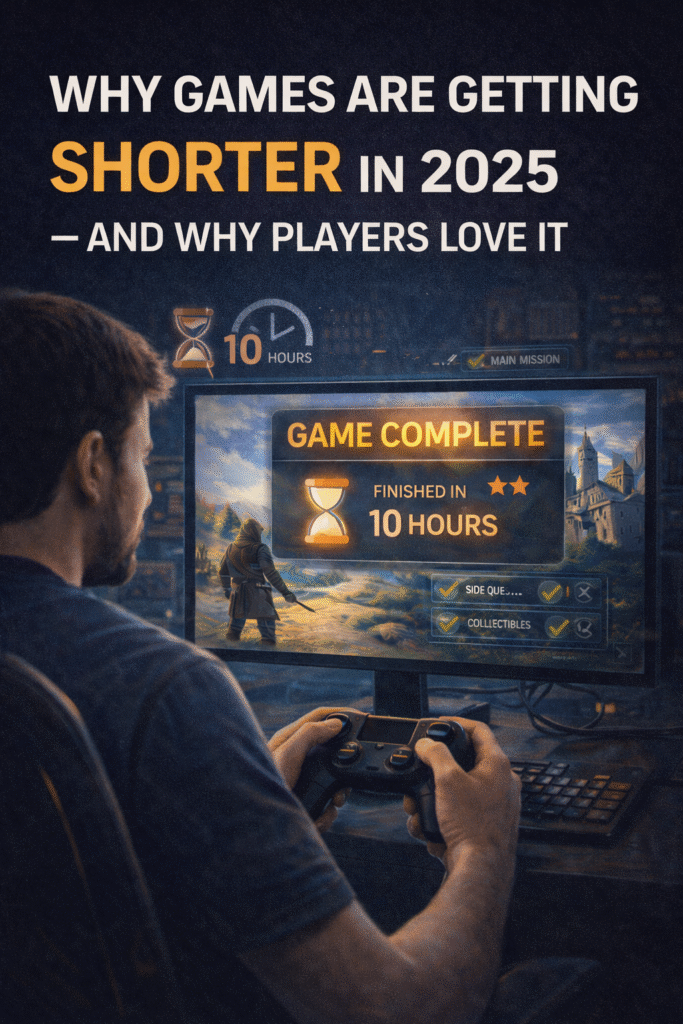
For years, bigger meant better in gaming.
Huge maps
100-hour campaigns
Endless side quests
Now, the trend is reversing.
In 2025, the most talked-about games aren’t the longest ones — they’re the ones you can finish in 10–20 hours or less. And this shift is driven by technology, not laziness.
⏱️ The Death of the “Endless Game” Mentality
Modern players don’t lack interest in gaming.
They lack uninterrupted time.
Technology has reshaped daily life:
- constant notifications
- short-form content
- multiple screens
- live services competing for attention
Long gaming sessions are harder to sustain.
Short, focused experiences fit modern lifestyles better.
Games are adapting — or losing players.
⚙️ How Technology Enables Shorter Games
Shorter games don’t mean simpler games.
New tools allow developers to:
- deliver high-quality visuals faster
- reuse systems efficiently
- cut filler content
- focus on meaningful mechanics
Procedural generation and modular design create depth without bloating playtime.
Technology makes compact experiences feel premium.
🎮 PC and Console Games Embrace Focused Design
On PC and consoles, studios are:
- prioritizing tight storytelling
- designing levels with purpose
- removing repetitive fetch quests
Players finish games more often — and feel satisfied.
Completion is becoming a selling point.
📱 Mobile Gaming Proved the Model Works
Mobile games mastered short sessions long ago.
They optimized for:
- quick rewards
- fast progression
- instant re-entry
Now, console and PC games are borrowing those design lessons — without sacrificing quality.
The result is games that respect the player’s time.
🏆 eSports and Competitive Games Follow Suit
Even competitive gaming is changing.
Matches are:
- shorter
- faster
- more intense
This improves:
- viewer engagement
- player stamina
- global scheduling
Technology enables faster matchmaking and smarter session design.
🔥 Why This Trend Is Going Viral
Players are openly saying:
“I want great games — not endless ones.”
Shorter games:
- reduce burnout
- encourage replay
- fit modern habits
- feel more intentional
This conversation is exploding across gaming communities because it challenges a long-held belief: bigger isn’t always better.
🔮 What the Future of Game Length Looks Like
In the coming years, expect:
- high-impact 8–15 hour games
- episodic premium releases
- replayable short campaigns
- story-driven seasonal content
- games designed to be completed, not abandoned
Game success will be measured by experience quality, not playtime.
🏁 Final Thoughts
The future of gaming isn’t about how long a game lasts.
It’s about how it makes you feel — and whether you want to return.
In a world of limited time and infinite content, the best games may be the ones that know when to end.
The question is no longer:
“How many hours does this game have?”
It’s becoming:
“Is every hour worth it?”


