

Redefining the Future of Technology with AR, Spatial Computing, and Immersive Experiences
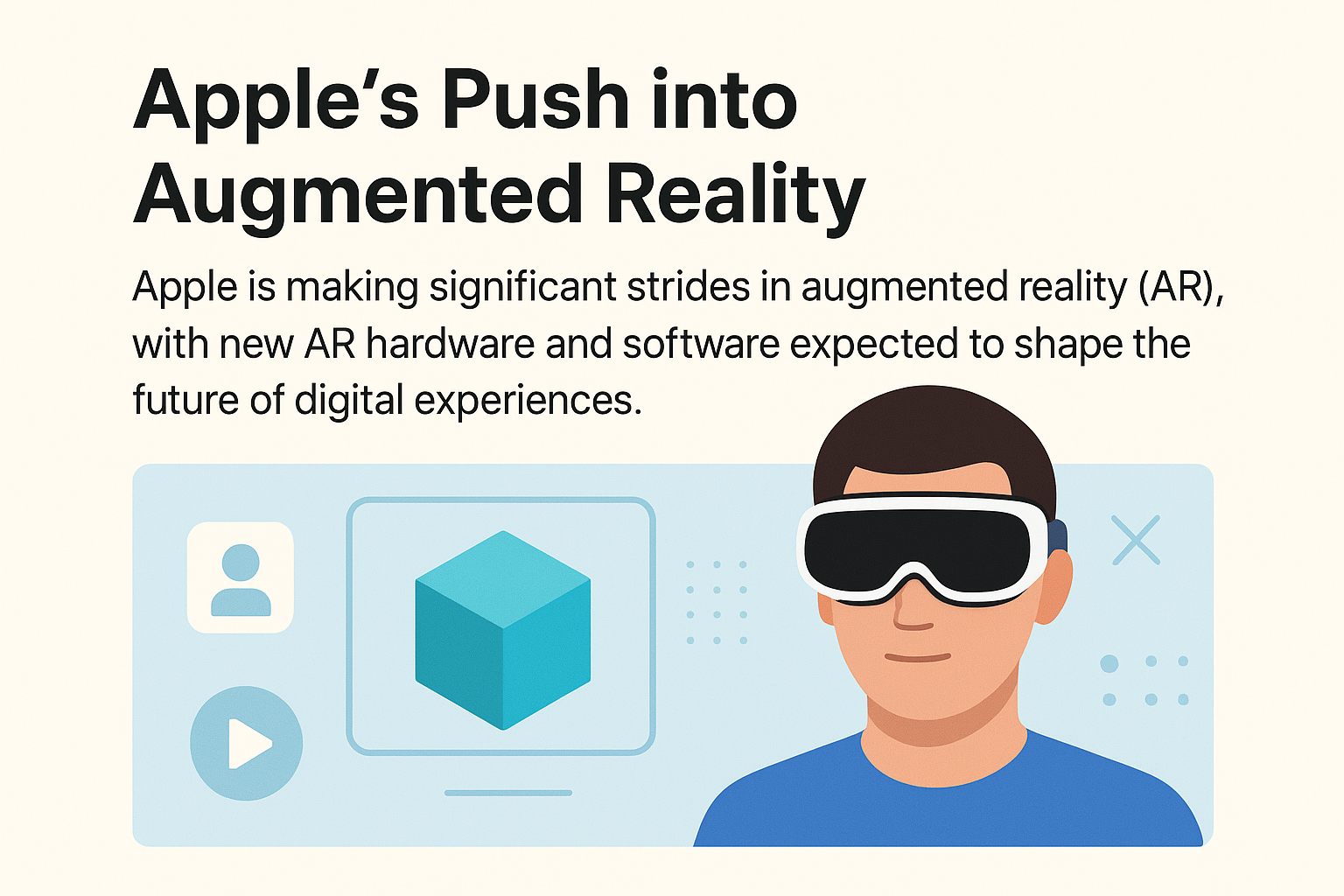
Apple’s Big Leap into AR
In 2025, Apple is making waves with its renewed focus on augmented reality (AR) and spatial computing. Following the successful debut of its AR headset, the company is now working toward a comprehensive AR ecosystem that combines hardware, software, and services.
Apple’s mission is clear yet ambitious: to redefine how people interact with the digital world in everyday life.
Beyond Devices: Building a Complete AR Ecosystem
Apple’s AR journey isn’t just about selling headsets. The real power lies in creating an end-to-end AR environment powered by the enhanced ARKit platform. Developers can now build groundbreaking apps across multiple industries, including:
- Healthcare → Virtual diagnostics and AR-assisted surgeries.
- Education → Immersive classrooms where lessons become experiences.
- Enterprise → Virtual offices and remote collaboration tools.
- Entertainment → Next-generation AR gaming where digital characters step into the real world.
This positions Apple not just as a hardware leader, but as a platform enabler shaping the future of immersive computing.
Transforming Everyday Interactions
Apple doesn’t view AR as a mere gadget—it’s a lifestyle revolution. The headset, and soon-to-arrive lightweight AR glasses, will seamlessly integrate across the Apple ecosystem—iPhone, iPad, Mac, and Apple Watch—making life smarter and more engaging.
Everyday use cases could include:
- 🏠 Interior Design → Place furniture virtually before buying.
- 🌍 Travel & Tourism → Discover cities with AR-powered guides.
- 🏋️ Fitness & Health → Train with a virtual AR fitness coach.
- 🛍️ Retail Shopping → Try on clothes, shoes, or accessories virtually before checkout.
Here, AR becomes the next interface of personal computing, not just a novelty.
The Competitive Landscape: Apple vs. Meta & Microsoft
The AR race is heating up. Meta continues to chase its metaverse dream, while Microsoft pushes HoloLens for enterprise applications. But Apple holds distinct advantages:
- Deep ecosystem integration
- Design excellence
- Unmatched brand trust
With a vast user base and loyal developer community, Apple is uniquely positioned to bring AR to the mainstream. Industry experts predict the AR/VR market could exceed $450 billion by 2030, with Apple capturing a large share through consumer adoption and enterprise partnerships.
What’s Next for Apple AR?
Rumors suggest Apple is already working on lightweight AR glasses, designed to make immersive tech as essential as the iPhone. Expected features include:
- 🔹 Real-time AI assistance (navigation, translation, reminders).
- 🔹 AR-enhanced FaceTime for lifelike conversations.
- 🔹 Seamless integration with Apple Vision Pro and other Apple devices.
- 🔹 Enterprise AR tools for remote work and training.
If these innovations succeed, AR glasses could mark the next major leap in personal technology.
Conclusion: The Dawn of Spatial Computing
Apple’s push into AR is more than another product launch—it’s the start of a paradigm shift in technology. Just as the iPhone revolutionized communication and the iPad transformed mobile computing, Apple’s AR ecosystem is set to usher in the era of spatial computing.
The company’s vision is bold yet practical: a world where digital and physical realities blend seamlessly, making tasks more interactive, businesses more innovative, and experiences more immersive.
With its proven history of turning futuristic concepts into everyday essentials, Apple’s AR revolution could define the next decade of technology.