

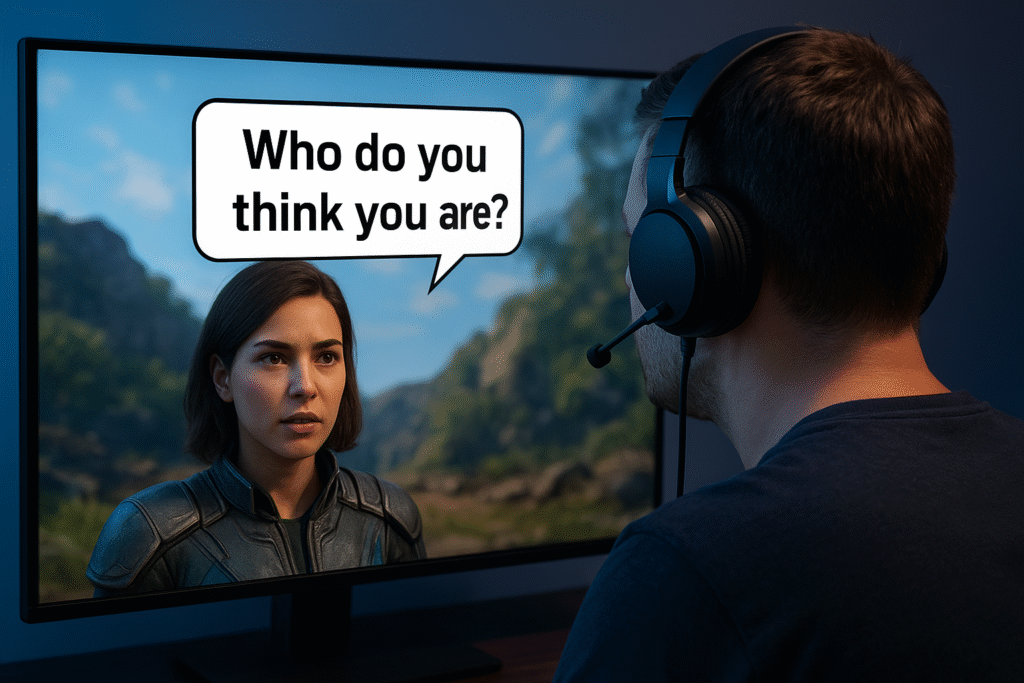
Imagine characters in games who not only respond, but react like real people — weaving conversation, emotions, and memory into every interaction. That future is already unfolding in 2025. AI-powered NPCs (non-playable characters) are no longer just background filler. They are becoming central to immersive gameplay, storytelling, and player experience in ways that could reshape what we expect from games.
1. What’s New with AI NPCs
- Instead of rigid dialogue trees, NPCs now can adapt their conversations based on past interactions, the player’s behavior, and even voice/text input.
- Some games and mods are using large language models (LLMs) to give NPCs personalities, emotional depth, and more realistic reactions.
- Developers are pairing AI NPCs with facial animations, voice synthesis, and environmental awareness so NPCs can act in context — responding to your actions, mood, or even the surrounding game world.
2. Examples That Are Blowing Up
- Ubisoft & NVIDIA’s “NEO NPCs”: These are prototypes of characters who adjust emotions, facial expressions, and dialogue dynamically. They’re built using tools like NVIDIA’s Audio2Face and Inworld AI. This means NPCs might recognize what’s happening around them — not just what the player says.
- Modded classics like Skyrim and Stardew Valley are getting AI companion mods. For example, one mod lets players chat naturally with NPCs (both text and voice) in a way that feels much more spontaneous. Fans love the deeper conversations.
3. Why This Is Going Viral
- Novelty & Shareability: When NPCs respond in unexpected ways, players record the moments and share on social media. Viral clips of a character reacting angrily, helpfully, or in shock are attention-grabbing.
- Emotional Engagement: Players feel more connected when NPCs remember them, respond differently based on past behavior, or act like real characters. That enhances immersion and keeps players engaged longer.
- Customization & Creativity: Game creators and modders are increasingly able to tweak AI behavior, personality, and responses. So every user’s experience can be a little different, allowing for unique storytelling.
4. Challenges and Criticisms
- Building AI NPCs is technically hard: balancing responsiveness vs. consistency (ensuring NPCs don’t say weird things), avoiding “broken immersion.”
- Resource demands: LLMs, voice generation, animation all need computing power. For smaller studios, these can be expensive.
- Safety and moderation: AI might produce unintended or inappropriate responses. Ensuring safe interactions, avoiding toxicity or offensive behavior is crucial.
5. What It Means for Gamers & Developers
- For Players: Prepare for richer, more personalized game worlds. Conversations with characters will be memorable rather than mechanical. Expect games where your choices, manner, style of play, and even your speech matter more.
- For Modders & Indie Devs: There’s a big opportunity. Adding AI companions or NPCs with personality to existing games/mods can make them stand out. Also, small creators might build unique experiences with fewer assets but more behavioral depth.
- For the Industry: Storytelling, design, and production pipelines will evolve. Writers, animators, AI specialists will need to work closely. Testing and quality control will take on new importance.
6. Looking Ahead: Where This Trend is Headed
- NPCs that can dynamically adapt not just dialogues but motives, memories, and growth over time (like characters that evolve with you).
- Fully voiced, context-aware NPCs in mainstream AAA games.
- Integration with VR/AR — voice, gestures, presence will make NPC interactions even more lifelike.
- Possible hybrid models: AI NPC mods + official games offering “player-customizable NPC behavior” or “conversation kits.”
Conclusion
AI-powered NPCs are one of the most exciting trends in gaming right now — because they change not just how games look, but how games feel. Moments where you talk to a character and feel heard, or when a minor NPC surprises you by acting like a real person, are going viral because they’re new, emotional, and deeply human.


