

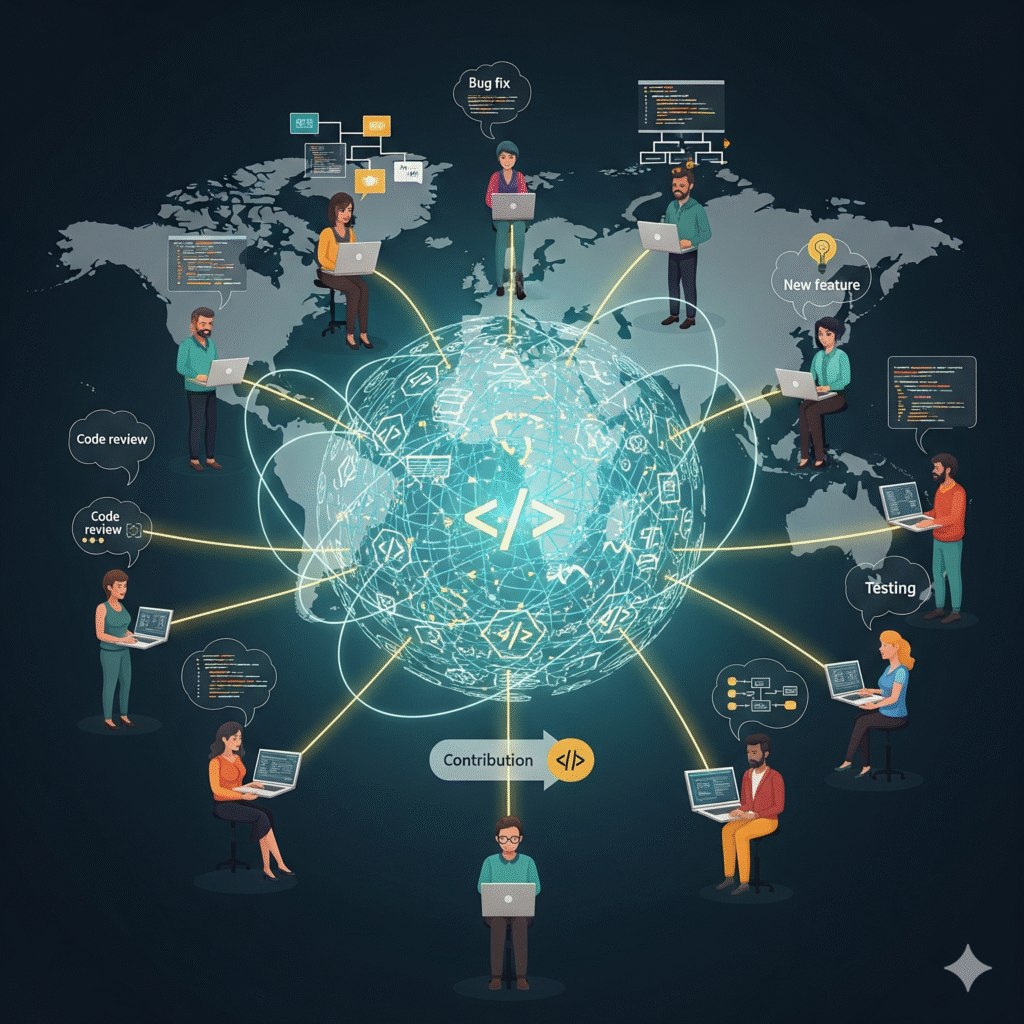
In the intricate tapestry of the digital age, few concepts hold as much transformative power as open-source software (OSS). It’s a philosophy, a movement, and a practical approach to building technology that emphasizes collaboration, transparency, and freedom. Beyond being “free” in cost, open source champions the freedom to inspect, modify, and distribute code, fostering an ecosystem of shared knowledge and continuous improvement. Let’s delve deeper into what makes open source a cornerstone of modern computing.
Understanding the Core: What Defines Open Source? 🤔
Open source isn’t merely about software being available for download without a price tag. The true essence lies in the licensing model that grants users specific freedoms, often encapsulated by the “Four Freedoms” articulated by the Free Software Foundation:
- The freedom to run the program as you wish, for any purpose.
- The freedom to study how the program works, and change it so it does your computing as you wish. (Access to the source code is a precondition for this).
- The freedom to redistribute copies so you can help your neighbor.
- The freedom to distribute copies of your modified versions to others. (This allows the community to benefit from your changes).
These freedoms ensure that the software remains a collective asset, preventing any single entity from monopolizing its development or use. This communal approach is what truly sets open source apart from proprietary software, where the source code is kept secret and usage is restricted by rigid licenses.
The Pillars of Impact: Why Open Source is Indispensable 💡
The ramifications of open source software are vast, touching upon various aspects of technology, economy, and society:
- Accelerated Innovation: By providing a public foundation, OSS allows developers to build upon existing solutions rather than constantly starting from scratch. This “lego block” approach speeds up development cycles and fosters rapid iteration and innovation. Think of how many projects use the Linux kernel or Apache web server as their base – they don’t need to rewrite these complex components.
- Enhanced Security & Reliability: The “many eyes” theory is critical here. When thousands of developers can examine the source code, bugs and security vulnerabilities are often identified and patched much faster than in proprietary systems where fewer people have access. This transparency leads to more robust and secure software.
- Cost Efficiency & Accessibility: For individuals and businesses alike, open source often means zero licensing fees. This significantly lowers entry barriers to powerful technology, making advanced tools accessible to startups, educational institutions, and developing regions that might not afford expensive proprietary alternatives.
- Customization and Flexibility: Unlike off-the-shelf proprietary solutions, open source software can be tailored to exact specifications. Businesses can modify the code to integrate perfectly with their unique workflows, ensuring the technology serves their specific needs, not the other way around.
- Community and Collaboration: Open source thrives on vibrant, global communities. Developers contribute their time and expertise, fostering a culture of mutual support, knowledge sharing, and peer review. This collaborative spirit drives continuous improvement and ensures the software evolves with user needs.
- Freedom from Vendor Lock-in: Proprietary software can tie users to a single vendor, making it difficult and costly to switch to competitors or adapt to new technologies. Open source, by its nature, provides choices and control, empowering users to move between solutions or maintain their own versions.
Ubiquitous Presence: Open Source in Your Daily Life ✨
You interact with open-source software constantly, often without realizing it. Here’s a glimpse of its pervasive influence:
- The Internet’s Backbone: The vast majority of web servers (like Apache and Nginx), routing infrastructure, and even domain name systems (DNS) rely on open-source projects.
- Mobile Ecosystems: The Android operating system, which powers billions of smartphones, is fundamentally open source.
- Cloud Computing: Leading cloud platforms heavily utilize open-source virtualization technologies (like KVM) and operating systems (Linux).
- Data & AI: Many of the most powerful tools in data science, machine learning, and artificial intelligence – such as Python libraries (TensorFlow, PyTorch) and R – are open source, fueling research and development worldwide.
- Everyday Productivity:
- Browsers: Mozilla Firefox, and the Chromium base used by Google Chrome, Microsoft Edge, and Brave.
- Office Suites: LibreOffice, providing a full suite of productivity tools.
- Media & Design: VLC Media Player (for virtually any media file), GIMP (image manipulation), Blender (3D modeling and animation), Audacity (audio editing).
- Development: Git (version control), Visual Studio Code (partially open source), various programming languages like Python, Java (Open Adoptium), PHP, JavaScript.
The Road Ahead: The Enduring Legacy of Open Source 🚀
The open-source movement is more than just a historical footnote; it is a dynamic force that continues to shape the future of technology. Its principles of openness, collaboration, and shared ownership are becoming increasingly relevant in areas like AI ethics, data privacy, and digital literacy. As the world becomes more interconnected, the spirit of open source will undoubtedly lead the way in building more transparent, equitable, and innovative digital solutions for generations to come.