

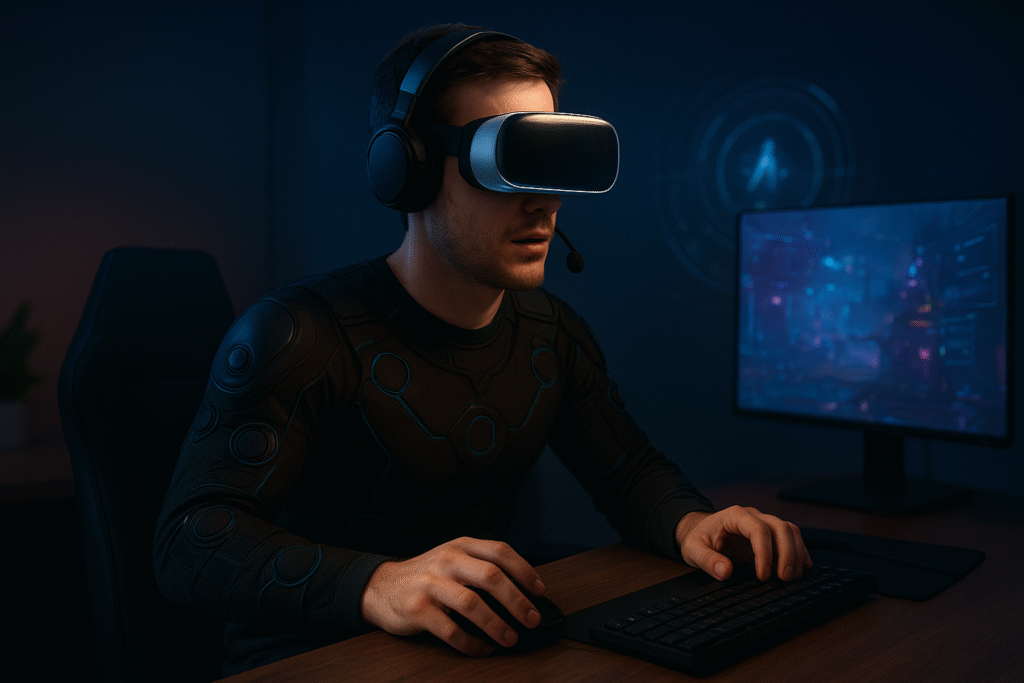
For decades, gaming has been about what we see and hear. But in 2025, the most exciting evolution isn’t visual or auditory — it’s tactile. The rise of haptic technology is turning gaming into a full-body experience. From feeling the texture of virtual armor to sensing the heartbeat of your in-game character, haptic feedback is bringing a new dimension to immersion.
What Is Haptic Technology?
Haptic technology lets players feel virtual sensations through physical feedback — vibrations, pressure, motion, and temperature changes. Think of your controller’s rumble feature, but multiplied by a thousand in complexity and realism.
The latest generation of haptics includes:
- Full-body suits like Teslasuit and bHaptics Tactsuit, letting players feel impact, temperature, and tension.
- Ultrasonic haptics, which use air vibrations to simulate touch without physical contact.
- Neural haptics, experimental tech that stimulates the nervous system directly for precise sensations.
PC Gaming: Precision Meets Immersion
In PC gaming, haptics have evolved beyond controller rumbles. High-end peripherals now simulate textures and resistance:
- Force-feedback keyboards adjust tension based on game scenarios — light taps for typing, heavy feedback in combat.
- Adaptive mouse triggers mimic the weight of pulling a bow or firing a heavy weapon.
- Racing simulators use hydraulic haptic rigs, letting drivers feel every bump, drift, and gear shift.
The result? Gameplay that’s not just immersive — it’s physical.
Console Gaming: PlayStation and Xbox Lead the Way
PlayStation set the tone with its DualSense controller, but 2025 takes it further.
- DualSense Neo now integrates micro-haptics, delivering sensations as subtle as footsteps or wind.
- Xbox SensePad — Microsoft’s newest controller — adapts pressure and texture on the fly, offering unique tactile sensations for each weapon and terrain.
Developers are designing games that use these features creatively. In horror titles, for instance, haptics simulate your pulse rate during tense moments — making fear feel real.
Mobile Gaming: Portable Sensation
Haptic innovation has reached mobile gaming, too. Smartphones like the iPhone 17 Pro and ASUS ROG Phone 9 now feature multi-zone haptic engines capable of localized sensations.
That means you can feel recoil on one side of the phone when firing a weapon, or a pulse on the other side when taking damage. Combined with AI-driven feedback mapping, mobile gamers can experience console-level immersion on the go.
eSports: The Edge of Sensation
In eSports, milliseconds matter — and haptics are becoming a tool for precision.
Pro players are using haptic vests and gloves that provide real-time feedback based on in-game data.
For example:
- A slight vibration warns of an approaching opponent.
- A pulse pattern indicates low health or ammo.
- Environmental haptics simulate crowd pressure in stadium events, enhancing the adrenaline rush.
It’s no longer just about visuals — it’s about feeling every move.
Game Reviews: Experiencing Games Beyond the Screen
Reviewers in 2025 have a new metric to judge games: tactile immersion.
Does the player feel the environment? Do haptic cues enhance gameplay or distract from it?
Titles like Phantom Pulse, Forza Horizon 6, and Resident Evil: Aftershock are being praised for groundbreaking haptic integration, setting new standards for immersion.
The Future: Neural Touch and Emotion Feedback
Companies like Meta, Valve, and Sony are exploring neuro-haptics, where devices stimulate specific nerve clusters to produce touch sensations directly in the brain.
There’s also research into emotional haptics, which sync your physiological state (like heartbeat or skin temperature) with in-game feedback. Imagine a racing game where your pulse influences the weather, or a horror game that adapts its intensity based on your fear response.
Conclusion: The New Sense of Gaming
Haptic technology is redefining what it means to “play.”
We no longer just control our characters — we feel their world.
As haptics evolve from subtle vibrations to full-sensory simulation, gaming will shift from being something you see to something you experience.
The future of gaming isn’t about better graphics or higher FPS — it’s about touching the impossible.


