

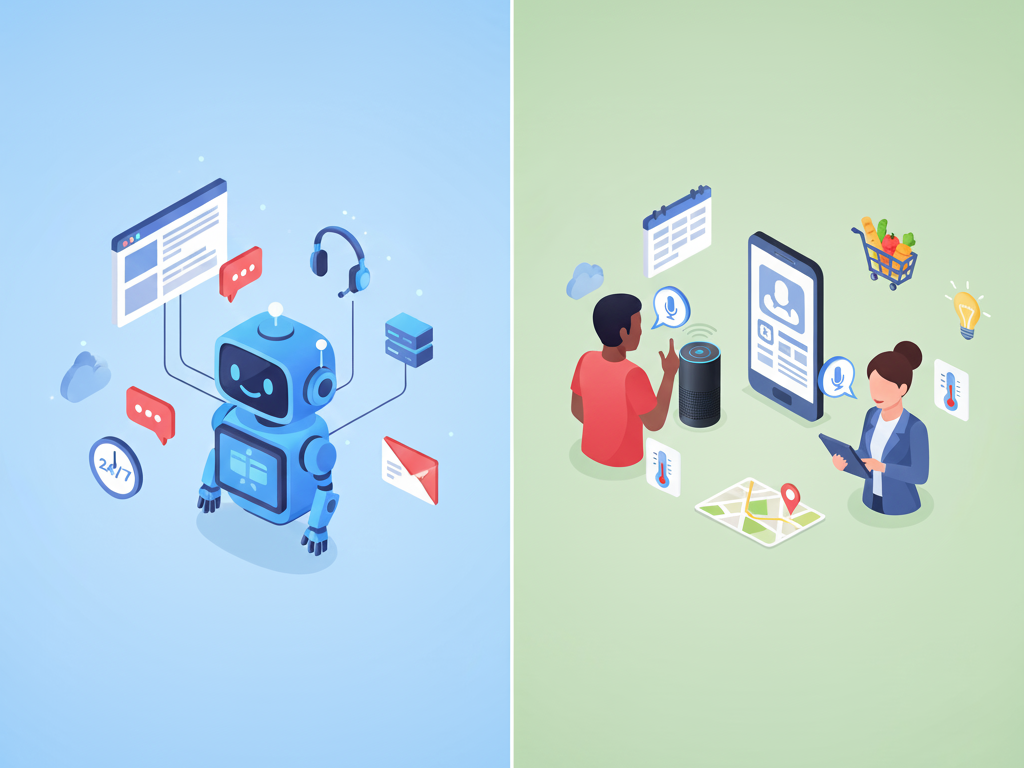
In today’s digital era, businesses are constantly looking for ways to improve customer experience and streamline operations. Two popular solutions that help achieve this are chatbots and virtual assistants. While the terms are often used interchangeably, they serve different purposes. Understanding the differences helps businesses choose the right solution.
What is a Chatbot?
A chatbot is an AI-powered software that simulates human-like conversations. Using natural language processing (NLP), chatbots can answer questions, provide product recommendations, and even process transactions.
Use cases of chatbots include:
- Customer support, such as answering FAQs and resolving simple issues
- E-commerce assistance by recommending products or helping with orders
- Lead generation and engagement, guiding users through a sales funnel
Key benefits of chatbots are:
- Providing 24/7 support with instant responses
- Handling thousands of conversations simultaneously
- Reducing the workload for human agents
- Collecting valuable customer data and insights
Examples include: LivePerson, IBM Watson Assistant, Sephora’s chatbot, and Domino’s “Dom.”
What is a Virtual Assistant?
A virtual assistant (VA) is a more advanced AI tool designed to act like a digital personal assistant. It goes beyond answering simple queries, helping users with scheduling, reminders, controlling smart devices, and retrieving complex information.
Use cases of virtual assistants include:
- Personal support for managing calendars, reminders, and to-do lists
- Business assistance with scheduling meetings, managing emails, and providing insights
- Smart home control, including lighting, thermostats, and security systems
- Customer service with more detailed troubleshooting or guided support
Key benefits of virtual assistants are:
- Automating repetitive tasks
- Learning and adapting to user preferences over time
- Offering a hands-free, integrated experience across multiple devices
Examples include: Google Assistant, Amazon Alexa, Apple Siri, Microsoft Cortana, and Samsung Bixby.
Key Differences Between Chatbots and Virtual Assistants
Chatbots are primarily designed for customer support and engagement. They handle simple, scripted interactions and are typically integrated into websites, apps, or messaging platforms. Personalization is limited, making them ideal for businesses that need scalable customer support.
Virtual assistants, on the other hand, focus on personal and business productivity. They manage complex, context-aware tasks, work across devices such as phones and smart speakers, and offer highly personalized experiences that improve over time. They are better suited for users and businesses that want automation, productivity, or smart device control.
Choosing the Right Tool
Use a chatbot if your main goal is to provide instant customer support, answer FAQs, or engage with users at scale. Opt for a virtual assistant if you need a tool to improve personal productivity, automate business tasks, or manage smart devices.
Final Thoughts
Both chatbots and virtual assistants enhance efficiency, reduce costs, and improve user experience. However, they are built for different purposes. Businesses should carefully assess their needs, choose the right solution, and combine automation with human support to deliver the best results.


