

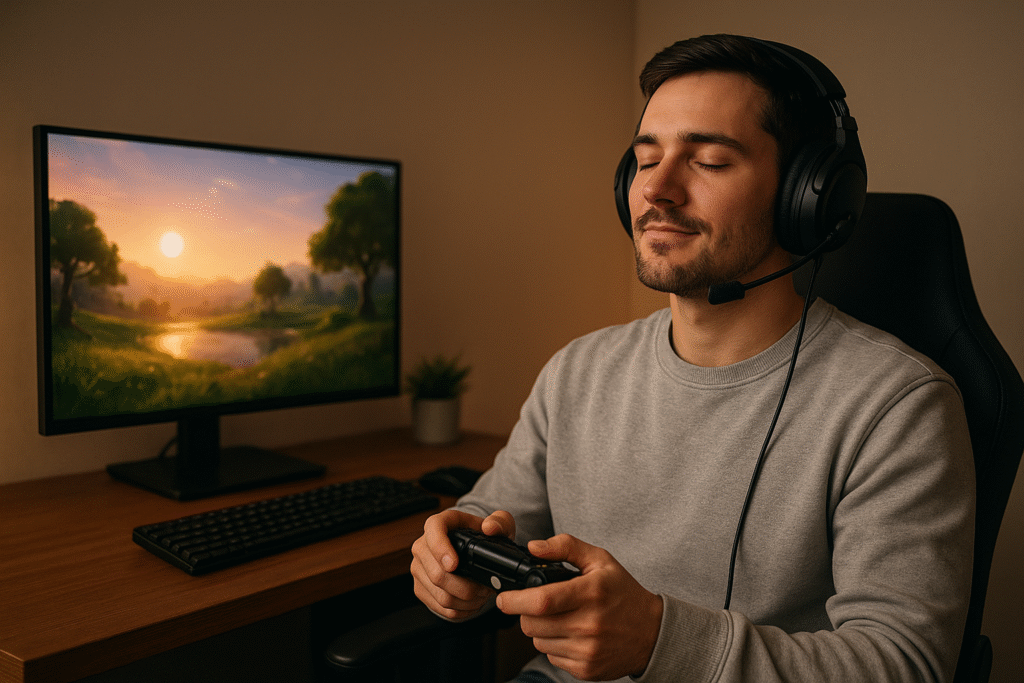
For decades, gaming has been at the center of debate. Parents, teachers, and even policymakers have often raised concerns about screen time, addiction, and negative effects on mental health. But in 2025, the story is changing — and in a big way. Instead of being seen as harmful, gaming is now increasingly recognized as a source of relaxation, connection, and emotional well-being.
This shift is driven by new types of games, growing communities, and fresh scientific research proving what millions of players already know: gaming can be good for you.
Games That Heal, Not Hurt
In the past, most games were designed with competition at their core — win, score, beat, dominate. While fun for many, it often left little room for relaxation. Today, a new wave of “cozy games” and wellness-focused experiences are changing the narrative.
Take VR meditation titles like ZenSpace VR. Instead of fighting battles, players wander through peaceful landscapes, practice breathing exercises, and interact with calming environments. Even traditional franchises are joining the movement. Pokémon Sleep, for example, gamifies rest itself, turning better sleep patterns into achievements. And indie titles like Stardew Valley 2 or Spiritfarer focus on nurturing, creativity, and emotional storytelling rather than aggression.
These games are proving that not all play has to be competitive. Sometimes, gaming is about slowing down, creating, and simply feeling better.
Digital Communities as Support Systems
Beyond the games themselves, the social side of gaming has become a lifeline for many. Guilds in MMORPGs, co-op squads in shooters, or even casual Discord groups are increasingly doubling as support circles. For some, logging into a game is not just about questing or climbing leaderboards — it’s about talking to friends, venting after a tough day, or feeling part of a community that understands them.
Platforms like Discord have noticed this shift and now host entire well-being servers, staffed with trained moderators who create safe digital spaces. Even streamers, once known only for their entertainment value, are openly discussing their struggles with mental health, breaking stigmas and showing audiences that it’s okay to not be okay.
Science Catches Up
For years, the scientific world was divided about the effects of gaming. But recent studies are tipping the scales in favor of the players. Research in 2025 shows that moderate gaming can reduce stress levels by up to 25% compared to non-gamers. Cooperative games that emphasize teamwork and problem-solving have been linked to improved emotional resilience and social bonding.
In fact, therapists are beginning to prescribe specific types of games to patients dealing with anxiety or depression. Instead of telling people to “switch off,” they’re recommending guided play sessions as a form of digital therapy. This marks a radical shift — gaming is no longer viewed as a problem, but as part of the solution.
The Rise of Digital Safe Spaces
Another fascinating development in 2025 is the growth of “digital safe spaces” inside games. Multiplayer environments that were once infamous for toxicity are transforming into havens for positivity. In Final Fantasy XIV, for instance, players run in-game cafés where people can simply hang out and chat, no combat required. VRChat hosts meditation classes, yoga sessions, and even group therapy meetups.
Meanwhile, major studios are taking responsibility by building AI-driven systems to reduce harassment and toxicity. Competitive titles like League of Legends are adopting tools that filter negative behavior in real time, making online play less stressful and more welcoming.
Why This Trend Is Exploding
What makes this movement go viral is how relatable it is. Everyone experiences stress, burnout, or loneliness, and the idea that games — something already loved by millions — could be part of the cure is powerful. On platforms like TikTok and Instagram, clips of people sharing how cozy games calm them, or how gaming communities helped them through hard times, are spreading like wildfire.
This is also a refreshing shift in narrative. After years of “gaming is harmful” headlines, positive stories stand out. They spark discussions, challenge old beliefs, and encourage more people — even non-gamers — to explore the benefits of play.
Conclusion: The Year of Positive Play
2025 may go down in history as the year gaming officially entered the wellness conversation. From VR meditation and cozy titles to online guilds and supportive streamers, games are no longer just an escape — they are a tool for healing, mindfulness, and connection.
So the next time you pick up a controller or log into your favorite MMO, remember this: you’re not just passing time. You might be boosting your mental health, building resilience, and connecting with a community that makes life a little brighter.
Gaming has always been about fun. But in 2025, it’s about feeling good, too.


