

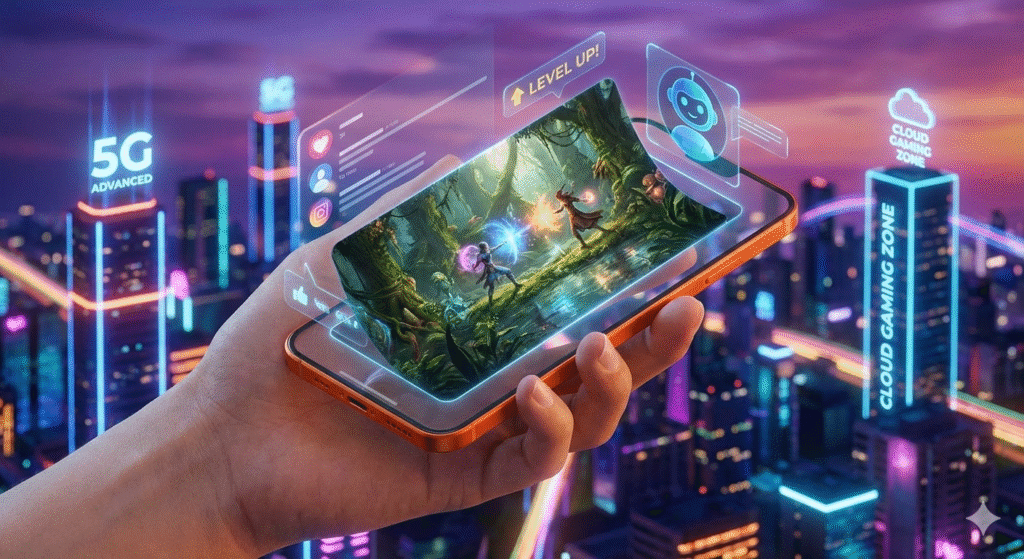
The long-debated wall between “mobile” and “core” gaming has finally crumbled. As we move through January 2026, the smartphone in your pocket is no longer just a communication device—it is a high-performance gaming terminal capable of running path-traced, console-quality epics.
From the silicon breakthrough of the A19 Pro to the massive launch of Arknights: Endfield, here is the state of mobile gaming today.
I. The Silicon War: A19 Pro vs. Snapdragon 8 Elite Gen 5
Hardware parity isn’t a future goal; it’s the current reality. The latest flagship chips have effectively turned smartphones into “handheld consoles” that can output 4K signals to external displays.
- Apple A19 Pro: Built on a refined 3nm process, the A19 Pro (found in the iPhone 17 Pro series) has set a new high-water mark for mobile efficiency. With a 33% jump in single-core performance, it handles massive open-world titles with a level of thermal stability we haven’t seen before.
- Snapdragon 8 Elite Gen 5: Qualcomm’s latest powerhouse has become the heart of the 2026 Android flagship wave. It excels in multi-core workloads, specifically optimized for Ray Reconstruction and AI-driven frame generation, making it the choice for hardcore gamers on devices like the OnePlus 15 and the upcoming Galaxy S26.
II. The January 2026 Release Wave
This month has been one of the most significant in mobile history, proving that “mobile-first” now means “Triple-A first.”
- Arknights: Endfield (Launched Jan 22): This isn’t just a gacha game; it’s a massive action-RPG with a complex base-building and factory-automation loop. Its seamless world transitions and real-time tactical combat are currently the benchmark for mobile graphics.
- The Seven Deadly Sins: Origin (Coming Jan 28): Netmarble’s open-world opus is set to drop in four days. It promises a “hardware-agnostic” experience, meaning the mobile version will feature nearly identical asset density to its PC and console counterparts.
- Rainbow Six Mobile (Feb 23): The tactical shooter is entering its final “Pre-Launch” phase this week, aiming to become the #1 mobile esport of 2026.
III. AI: From Buzzword to Infrastructure
In 2026, AI is the invisible engine powering your sessions. Over 50% of mobile studios have integrated AI directly into their game logic.
Agentic NPCs: The biggest trend of the year is the move away from scripted dialogue. In games like Endfield, NPCs use local NPUs (Neural Processing Units) to remember your past interactions, adapt their combat tactics to your playstyle, and even offer “procedural quests” that are unique to your save file.
2026 Mobile Trends at a Glance
| Feature | 2024 Benchmark | 2026 Standard |
| Monetization | Aggressive Ads/Gacha | Modular Rewards & “D2C” Web-Shops |
| Latency | 50ms – 100ms | <20ms (via 5G-Advanced/Cloud) |
| Graphics | Limited Ray Tracing | Full Path Tracing & AI Upscaling |
| Social | Isolated Apps | Integrated “Living” Ecosystems |
| Cross-Platform | “Mobile-Only” versions | Day-and-Date Feature Parity |
IV. The “15-Minute” Thermal Battle
As games become heavier, Thermal Endurance has become the most important spec. Modern gaming phones (like the REDMAGIC series) now feature active liquid cooling and internal fans to bypass the “15-minute throttle.” Without active cooling, even the fastest chips lose up to 30% of their power after a single match of Warzone Mobile or Valorant Mobile.
The Bottom Line
Mobile gaming in 2026 is defined by Platform Collision. We are seeing a hardware-agnostic future where you can start a raid on your PC and finish it on your phone during lunch without losing a single frame of quality. The smartphone is no longer the “lesser” platform—it’s the most versatile one.


