

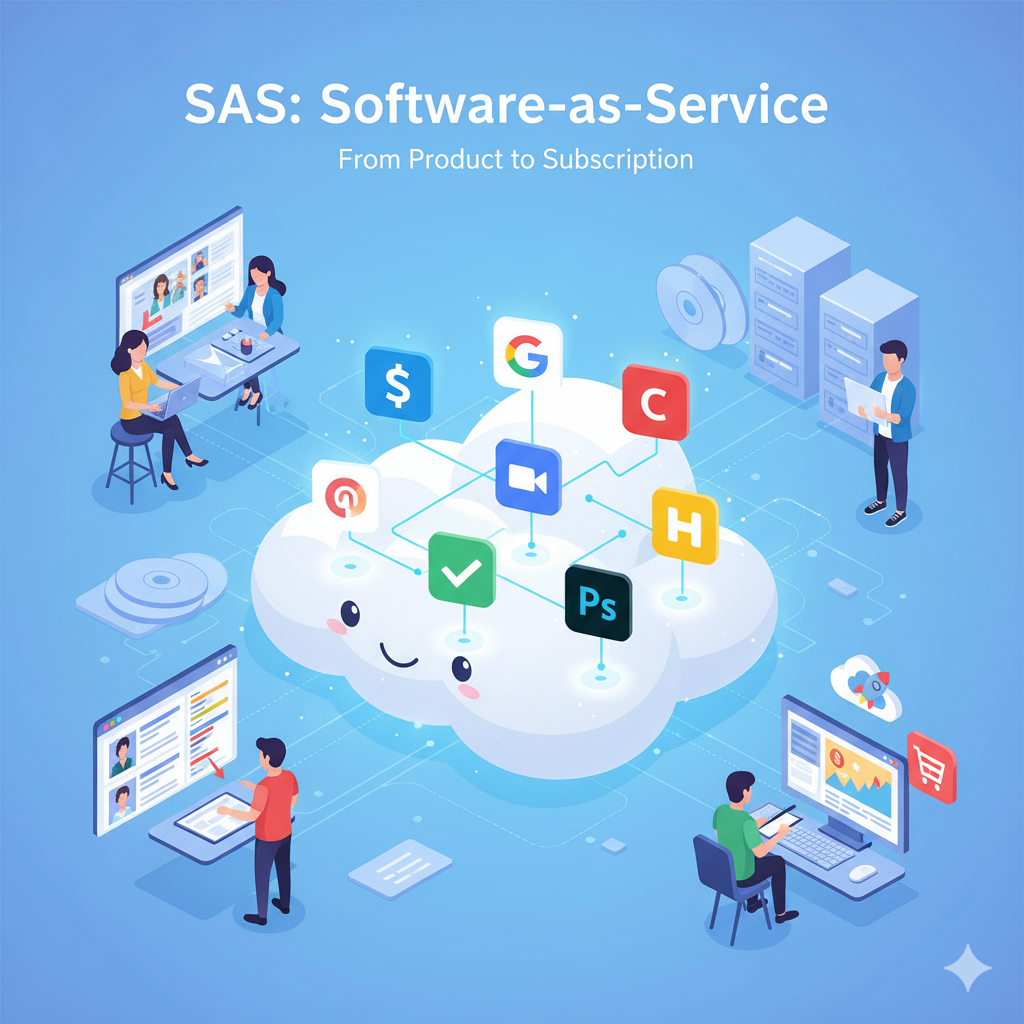
Remember when buying software meant a trip to the store for a CD-ROM, followed by a lengthy installation process and managing updates yourself? Those days are increasingly behind us, thanks to the revolutionary shift towards SaaS – Software-as-a-Service. SaaS platforms have transformed how businesses and individuals access, use, and pay for software, moving it from a product you own to a service you subscribe to.
What Exactly is SaaS?
SaaS is a cloud-based software delivery model where a third-party provider hosts applications and makes them available to customers over the internet. Instead of installing and maintaining software, you simply access it via a web browser or a dedicated app, typically on a subscription basis.
Think of it like electricity or water: you don’t own the power plant or the water treatment facility; you just pay a monthly fee to use the service. Similarly, with SaaS, you subscribe to use the software without worrying about its underlying infrastructure, maintenance, or updates.
Key characteristics of SaaS include:
- Cloud-based: Accessible via the internet from anywhere, on any device.
- Subscription Model: Typically paid monthly or annually.
- No Installation Required: Eliminates the need for local software installation and complex setup.
- Automatic Updates: The provider handles all updates and maintenance seamlessly.
- Scalability: Easily scale usage up or down as your needs change.
Why SaaS is Taking Over: The Benefits
The widespread adoption of SaaS isn’t just a trend; it’s driven by significant advantages for both users and providers:
- For Users (Businesses & Individuals):
- Reduced Costs: Eliminates large upfront licensing fees and infrastructure investments. You pay for what you use.
- Instant Accessibility: Access your tools from any location, on any device with an internet connection. Perfect for remote work and mobile teams.
- Effortless Maintenance & Updates: No more IT headaches! The provider handles all technical upkeep, ensuring you always have the latest, most secure version.
- Scalability & Flexibility: Easily add or remove users, features, or storage as your business grows or contracts.
- Faster Deployment: Get up and running almost instantly, without lengthy installation processes.
- Enhanced Collaboration: Many SaaS tools are built for team collaboration, enabling real-time co-editing and communication.
- For Providers (Software Companies):
- Recurring Revenue: The subscription model provides stable, predictable income.
- Direct Customer Relationships: Closer interaction with users allows for better feedback and product development.
- Easier Distribution: Reach a global audience without physical distribution channels.
- Simplified Updates: Roll out new features and bug fixes to all users simultaneously.
SaaS Platforms You Use Every Day
You’re likely already using numerous SaaS applications without even thinking about it. Here are some prime examples:
- Communication & Collaboration: Slack, Microsoft 365 (Outlook, Word, Excel online), Google Workspace (Gmail, Docs, Drive), Zoom.
- Customer Relationship Management (CRM): Salesforce, HubSpot.
- Project Management: Asana, Trello, Monday.com.
- Design & Creativity: Canva, Adobe Creative Cloud (e.g., Photoshop, Illustrator via subscription).
- Financial & Accounting: Xero, QuickBooks Online.
- Human Resources: Workday, BambooHR.
- Marketing & Sales: Mailchimp, Shopify.
The Future is in the Cloud
SaaS has fundamentally altered the software industry, making powerful applications more accessible, affordable, and flexible than ever before. As cloud technology continues to advance, we can expect even more sophisticated, integrated, and intelligent SaaS platforms to emerge, further streamlining our work and personal lives. The era of software as a service is not just here; it’s continuously evolving, promising a future where cutting-edge tools are always just a click away.


