

For most of gaming history, interaction meant one thing:
press a button, see something happen.
In 2025, that boundary is disappearing.
Games are no longer just something you see and hear.
They’re becoming something you feel.
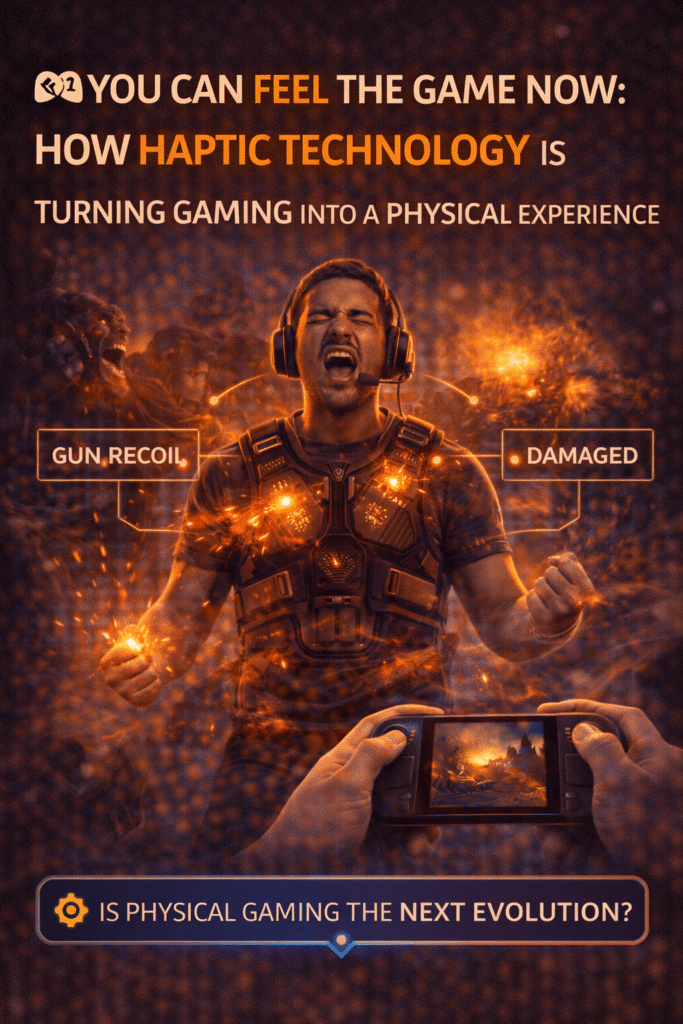
Thanks to advanced haptic technology, gaming is entering an era where explosions shake your body, footsteps vibrate your legs, and damage isn’t just visual — it’s physical.
🖐️ What Is Haptic Gaming Technology?
Haptics use controlled vibrations, pressure, and motion feedback to simulate touch and impact.
Modern gaming haptics go far beyond simple controller rumble. They now include:
adaptive triggers
localized vibration motors
wearable haptic vests
gloves with force feedback
full-body suits
The goal is simple: translate in-game events into physical sensations.
🚀 Why Haptic Gaming Is Exploding Right Now
This technology existed for years, but 2025 changed everything.
🎮 Next-Gen Hardware Made It Precise
Modern consoles, VR headsets, and peripherals now support:
micro-vibration control
directional feedback
pressure sensitivity
real-time intensity changes
Haptics are no longer generic — they’re contextual.
A gun reload feels different from a heartbeat.
Rain feels different from fire.
🧠 AI Is Making Feedback Smarter
AI systems now decide:
where feedback happens
how strong it should feel
how long it lasts
The game understands the situation — and your reaction — then adjusts the physical response dynamically.
🎯 How Haptics Change Gameplay
This isn’t just immersion.
It changes how games are played.
🔫 Combat Becomes Instinctive
You don’t just see you’re taking damage.
You feel:
impact direction
weapon recoil
armor absorption
Players react faster because feedback bypasses visuals and goes straight to the nervous system.
😱 Horror Games Become Almost Unplayable
Haptics are terrifying in horror games.
A vibration on your back when something is behind you.
A slow pulse matching your character’s heartbeat.
Sudden shocks during jump scares.
Fear stops being cinematic — it becomes physical.
🏃 Movement Feels Real
Running, sliding, falling, and landing now have weight.
Your body understands the action before your eyes do.
🔥 Why This Topic Is Going Viral
Because it pushes gaming dangerously close to reality.
Gamers online are asking:
Is this too immersive?
Will it cause sensory fatigue?
Can games become overwhelming?
Are we ready for this level of realism?
Clips of players physically reacting to in-game events are spreading fast across social platforms.
⚠️ The Dark Side of Physical Gaming
More realism comes with real concerns.
Extended haptic use can cause:
physical exhaustion
sensory overload
increased emotional stress
Some experts warn that hyper-immersive gaming may blur the line between simulation and reality — especially in VR.
💰 The Business Behind the Sensations
Haptics are also becoming a monetization layer.
Future games may:
sell premium haptic experiences
lock advanced feedback behind DLC
offer hardware-exclusive sensations
Feeling the game could become a paid feature.
🔮 What the Future of Haptic Gaming Looks Like
In the coming years, we may see:
full-body feedback in esports training
medical-grade haptics for rehab gaming
fitness games that feel workouts
emotion-based feedback systems
VR worlds you can physically sense
Games won’t just respond to your actions —
they’ll respond to your body.
🏁 Final Thoughts
Graphics made games look real.
Sound made them feel alive.
Haptic technology is doing something bigger.
It’s making games physical experiences.
Soon, “feeling the game” won’t be a metaphor —
it’ll be literal.
And once gaming starts engaging the body as much as the mind, there’s no going back.


