

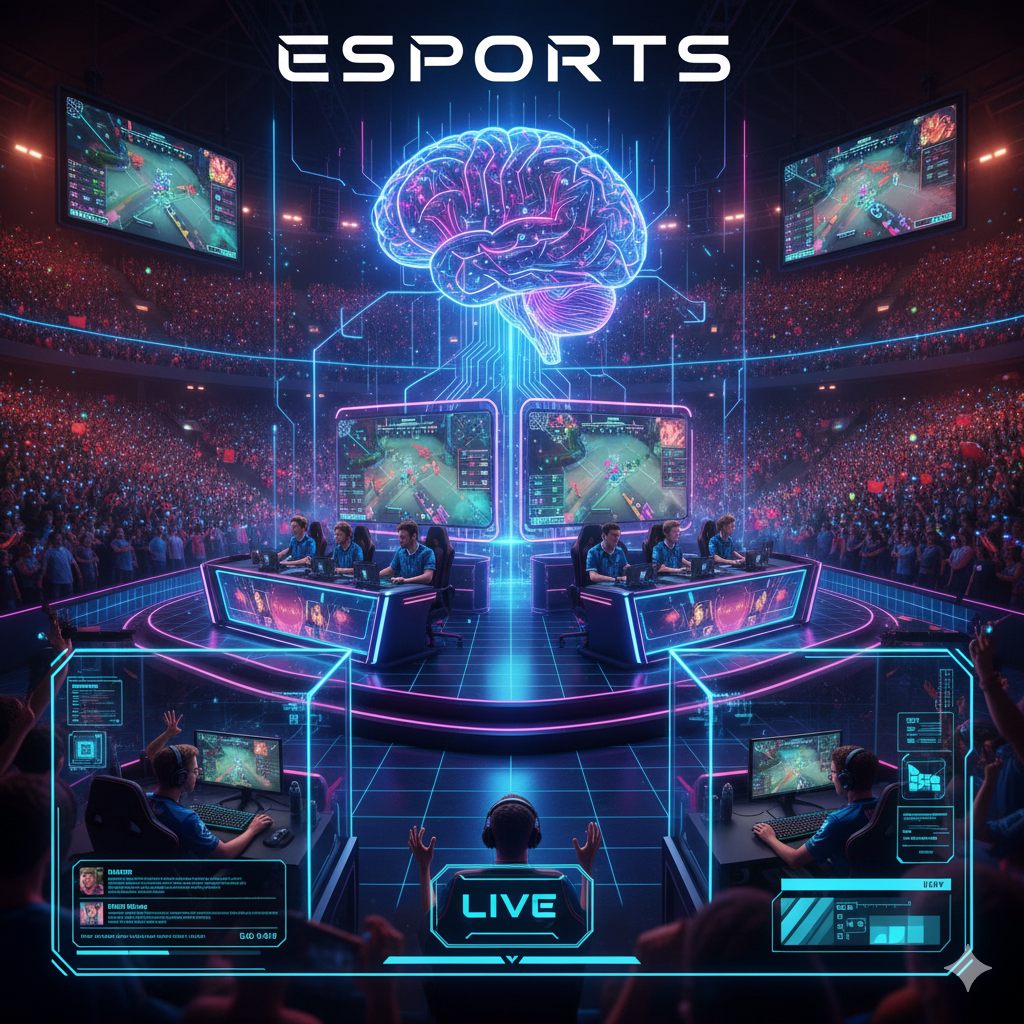
Once relegated to basements and arcades, competitive video gaming, or Esports, has exploded into a global phenomenon, rivaling traditional sports in viewership, prize pools, and professional structure. What started as friendly competition among gamers has transformed into a multi-billion dollar industry, complete with professional players, dedicated teams, massive arenas, and millions of passionate fans worldwide.
What is Esports?
Esports (electronic sports) refers to organized, multiplayer video game competitions, typically between professional players, individually or as teams. These competitions are often streamed live to audiences around the world, both online and in physical arenas.
Key characteristics of Esports:
- Organized Play: Structured leagues, tournaments, and championships with official rules.
- Professional Players: Individuals who train rigorously, often full-time, to compete at the highest level.
- Spectator Sport: Designed to be watched, with commentators, analysis, and broadcast quality productions.
- High Stakes: Significant prize pools, sponsorships, and career paths for successful players.
The Evolution of a Phenomenon
The journey of Esports from niche hobby to mainstream entertainment has been rapid:
- Early Days (1970s-1990s): Simple arcade game competitions and early PC LAN parties laid the groundwork. The “Space Invaders Championship” in 1980 is often cited as one of the first organized video game competitions.
- Internet Era (2000s): The rise of broadband internet and competitive online games like StarCraft, Counter-Strike, and Quake fostered dedicated communities and early professional leagues, particularly in South Korea.
- Modern Boom (2010s-Present): The advent of streaming platforms (Twitch, YouTube Gaming), massive multiplayer online battle arenas (MOBAs) like League of Legends and Dota 2, and battle royales like Fortnite and PUBG propelled Esports into the global spotlight. Large-scale investments from endemic (gaming hardware) and non-endemic (Coca-Cola, Mercedes-Benz) brands cemented its status.
The Big Titles: What Games Dominate Esports?
Esports thrives on competitive games that require high skill, strategic depth, and consistent updates. Some of the most popular genres and titles include:
- MOBAs (Multiplayer Online Battle Arenas):League of Legends, Dota 2, Mobile Legends: Bang Bang
- Known for: Deep strategy, complex team play, vast character rosters.
- FPS (First-Person Shooters):Counter-Strike 2, Valorant, Call of Duty, Overwatch 2
- Known for: Precise aim, tactical positioning, fast reflexes.
- Battle Royales:Fortnite, PUBG: Battlegrounds, Apex Legends
- Known for: Last-person standing mechanics, resource management, dynamic maps.
- Fighting Games:Street Fighter, Tekken, Super Smash Bros.
- Known for: One-on-one skill, intricate combos, character matchups.
- Sports Games:FIFA (EA Sports FC), NBA 2K
- Known for: Simulating traditional sports, strategic team building.
The Ecosystem of Esports: More Than Just Players
The Esports industry is a complex and thriving ecosystem:
- Professional Players: The stars of the show, often earning significant salaries, prize money, and endorsement deals.
- Teams & Organizations: Entities that sign, manage, and train professional players (e.g., T1, Fnatic, Cloud9).
- Game Developers/Publishers: Own the intellectual property and often run or sanction major tournaments (e.g., Riot Games for League of Legends).
- Tournament Organizers: Companies that produce and broadcast events (e.g., ESL, BLAST).
- Streamers & Content Creators: Individuals who broadcast their gameplay, often building massive followings and acting as crucial entry points for new fans.
- Sponsors & Advertisers: Brands that invest in teams, players, and events to reach the highly engaged Esports audience.
The Future of Esports: Growth and Mainstream Recognition
Esports is on a clear trajectory of continued growth and increasing mainstream acceptance.
- Bigger Arenas & Viewership: Events are selling out iconic venues, and online viewership continues to break records.
- Academic Programs: Universities are offering scholarships and degrees in Esports management, game design, and even professional playing.
- Technological Integration: Advancements in augmented reality (AR) and virtual reality (VR) could create even more immersive spectator experiences.
- Mobile Esports: Particularly in Asia, mobile gaming has become a massive Esports category, bringing competitive play to an even wider audience.
Esports is no longer just a niche activity; it is a vibrant, competitive, and culturally significant form of entertainment. It celebrates skill, strategy, and teamwork, captivating a new generation of fans and cementing its place alongside traditional sports as a true global spectacle.


