

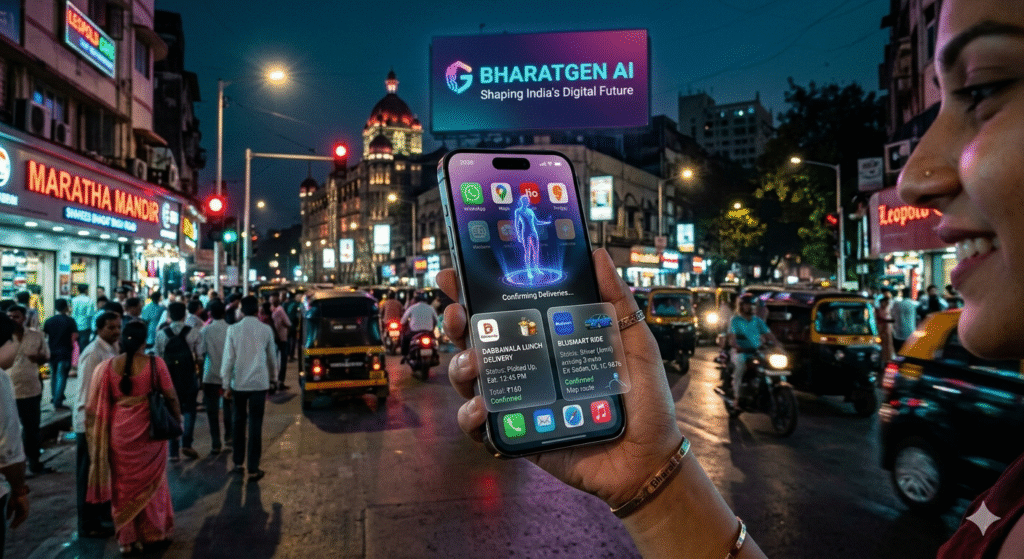
If you still find yourself manually opening five different apps to plan a dinner date—checking a calendar, searching for a restaurant, booking a table, hailing a ride, and sending an invite—you are officially living in the past.
As of Tuesday, March 10, 2026, the mobile landscape has reached its “iPhone moment” of the AI era. We aren’t just “using apps” anymore; we are managing Intent. The smartphone has evolved from a pocket computer into a proactive Digital Chief of Staff.
Here is your deep dive into the state of mobile apps this morning.
I. The OS War: Android 17 vs. iOS 19 Rumors
The battle for your pocket has moved from “who has the best camera” to “who has the best Orchestrator.”
- Android 17 Beta 2 (The “AppFunctions” Era): Released just last week, Android 17 is a developer’s dream. The new AppFunctions framework allows apps to expose their internal guts to Gemini 3. You can now long-press the power button and say, “Order my usual pizza but make it a large because Rahul is coming over,” and Gemini uses the data from your contacts, your previous orders, and the Zomato API to execute the task without you ever seeing the Zomato UI.
- The iOS 19 “Conversational Siri” Leak: Rumors ahead of June’s WWDC suggest that Apple is finally moving Siri to a fully LLM-based architecture. The “leaked” features describe System-Wide Awareness, where Siri can “see” what’s on your screen across any app. If you’re looking at a flight confirmation in Gmail, you can simply whisper, “Add this to my calendar and book a teal-colored Uber for 4:00 PM,” and it happens silently in the background via Private Cloud Compute.
II. Hardware: The “S26 Day-Minus-One” Hype
Tomorrow, March 11, the Samsung Galaxy S26 officially hits the shelves in India. The “Unpacked” buzz is all about the Exynos/Snapdragon 8 Gen 5 chips featuring a massive 55 TOPS NPU.
- Now Nudge: Samsung’s new feature observes your conversational context in real-time (locally). If a friend texts you about a meeting, a small glassmorphic “Nudge” appears at the top of your screen, already showing your availability and a button to “Confirm & Invite.”
- Privacy Display: The S26 Ultra debuts a display-integrated layer that uses AI to detect “shoulder-surfing.” If the front camera senses a stranger’s eyes on your screen while you’re in a banking app, it instantly blurs the sensitive data.
III. The “Ghost UI” Trend: Why Apps are Disappearing
The hottest trend in mobile design for 2026 is Ghost UI (also known as Agentic Front-ends).
“The best interface is the one that doesn’t exist until you need it.”
Instead of a static grid of colorful icons, the 2026 home screen is a dynamic, glassmorphic space.
- Contextual Widgets: Your home screen now reshapes itself based on your location and time. At the office? Your Slack “Agent” and “Deep Work” shortcuts are front and center. At home? Your “Smart Home” and “Playstation Remote” nodes take over.
- Ephemeral Interfaces: When you ask your AI to book a ride, a translucent, floating window appears over your current app, shows the car’s progress, and then melts away. You never “leave” your primary task.
The Mobile Evolution: 2024 vs. 2026
| Feature | 2024 (Passive Apps) | 2026 (Agentic Apps) |
| Interaction | Manual Taps & Swipes | Voice, Gesture, & Intent |
| Connectivity | 5G (Fast Internet) | 6G Alpha / Edge Computing |
| Intelligence | Chatbots (Siri/Copilot) | Autonomous Agents (Chief of Staff) |
| User Interface | Fixed Grid (App Icons) | Ghost UI (Fluid & Contextual) |
| Privacy | Cloud-Reliant | On-Device / Private Cloud Compute |
| Localization | Translation Apps | Native “Sutra” Integration (22+ Indian Languages) |
IV. The BharatGen Impact: Sovereign Super-Apps
In India, the BharatGen initiative has fundamentally changed the app store.
- The Vernacular Pivot: Apps like Tata Neu and JioSpace have integrated the Param2 model. You can now talk to these “Super Apps” in a mix of Hindi and Telugu (Hinglish/Telugish), and the AI understands the colloquialisms perfectly.
- The “Next Billion” Advantage: AI-driven voice interfaces are finally breaking the literacy barrier. Farmers in rural Karnataka are now using specialized agritech apps that function entirely through voice-activated agents, bypassing complex menus and text-heavy forms.
V. The Developer’s New Reality
If you’re an app developer in 2026, you’re no longer building “screens.” You’re building Capabilities.
- Agentic Reach: Success is now measured by how well your app’s functions can be “called” by the OS-level agent. If Gemini can’t “see” your checkout button, your app is invisible.
- Initialization Handshaking: Developers are now using the Model Context Protocol (MCP) to ensure their apps can securely “handshake” with the user’s personal agent, sharing only the data needed to complete a specific task.


