

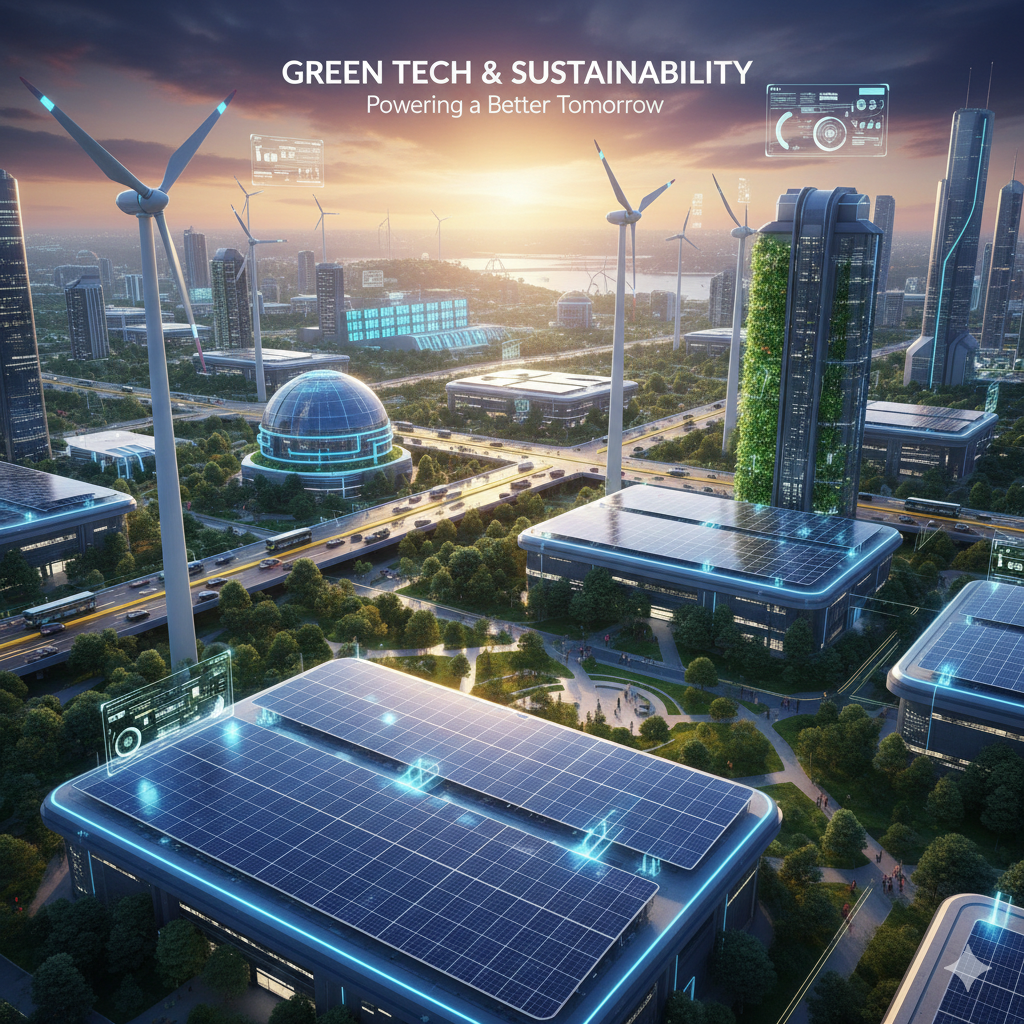
As global challenges like climate change, resource depletion, and pollution intensify, humanity is turning to innovation for solutions. Green Technology (Green Tech), also known as environmental technology or clean technology, is at the forefront of this effort. It encompasses technologies and methods that aim to mitigate human impact on the environment, conserve natural resources, and promote a more sustainable way of life.
Sustainability is the overarching goal: meeting the needs of the present without compromising the ability of future generations to meet their own needs. Green Tech provides the tools to achieve this balance.
What is Green Tech?
Green Tech involves developing and applying technologies that:
- Reduce environmental impact: Lowering greenhouse gas emissions, minimizing waste, and decreasing pollution.
- Conserve resources: Efficiently using energy, water, and raw materials.
- Promote renewable sources: Harnessing natural, replenishable energy and materials.
- Restore natural environments: Developing methods to clean up existing environmental damage.
It’s a diverse field, spanning energy, transportation, agriculture, manufacturing, and waste management.
Key Pillars of Green Tech Innovation
Green Tech is driving innovation across several critical sectors:
1. Renewable Energy Systems
This is perhaps the most recognized aspect of Green Tech, focusing on replacing fossil fuels with clean, inexhaustible sources.
- Solar Power: Advanced photovoltaic cells are becoming more efficient and affordable, driving widespread adoption from rooftop panels to massive solar farms. Innovations include flexible solar panels and perovskite solar cells.
- Wind Power: Wind turbines, both onshore and offshore, are growing in size and efficiency, becoming a major source of electricity generation.
- Geothermal Energy: Tapping into the Earth’s internal heat for electricity and heating/cooling.
- Hydropower & Tidal/Wave Energy: Harnessing the power of water movement.
- Energy Storage: Crucial for renewables, advancements in battery technology (lithium-ion, solid-state, flow batteries) are making grid-scale storage viable, allowing energy generated during peak production to be used when needed.
2. Sustainable Transportation
Reducing emissions from vehicles is vital for urban air quality and climate goals.
- Electric Vehicles (EVs): Rapid advancements in battery technology, charging infrastructure, and vehicle performance are making EVs a mainstream option for personal and public transport.
- Hydrogen Fuel Cells: A promising zero-emission alternative, especially for heavy-duty transport, buses, and potentially aviation.
- Biofuels: Sustainable fuels derived from biomass, offering an alternative to fossil fuels.
- Smart Mobility: Technologies that optimize traffic flow, promote public transit, and encourage shared mobility to reduce overall vehicle miles traveled.
3. Circular Economy & Waste Management
Moving away from a “take-make-dispose” linear economy to one that maximizes resource efficiency.
- Advanced Recycling: New technologies for recycling complex materials (plastics, electronics) that were previously difficult to process.
- Waste-to-Energy: Converting non-recyclable waste into electricity or heat.
- Composting & Anaerobic Digestion: Turning organic waste into valuable soil amendments or biogas.
- Sustainable Materials: Developing biodegradable plastics, eco-friendly building materials, and upcycled products.
4. Smart Grids & Energy Efficiency
Optimizing energy consumption and distribution.
- Smart Grids: Using digital technology to monitor and manage the transport of electricity from all generation sources to meet the varying electricity demands of end-users.
- Smart Homes & Buildings: Automated systems that optimize lighting, heating, and cooling to minimize energy waste.
- Carbon Capture & Storage (CCS): Technologies that capture CO2 emissions from industrial sources and store them underground or convert them into useful products.
The Road Ahead: Collaboration and Innovation
The growth of Green Tech and the pursuit of sustainability require unprecedented collaboration between scientists, engineers, policymakers, businesses, and individuals. Investments in research and development, supportive government policies, and conscious consumer choices are all critical drivers.
Green Tech isn’t just about protecting the planet; it’s about creating new industries, fostering economic growth, and building healthier, more resilient communities for everyone. It’s the ultimate example of how innovation can pave the way for a brighter, greener future.


