

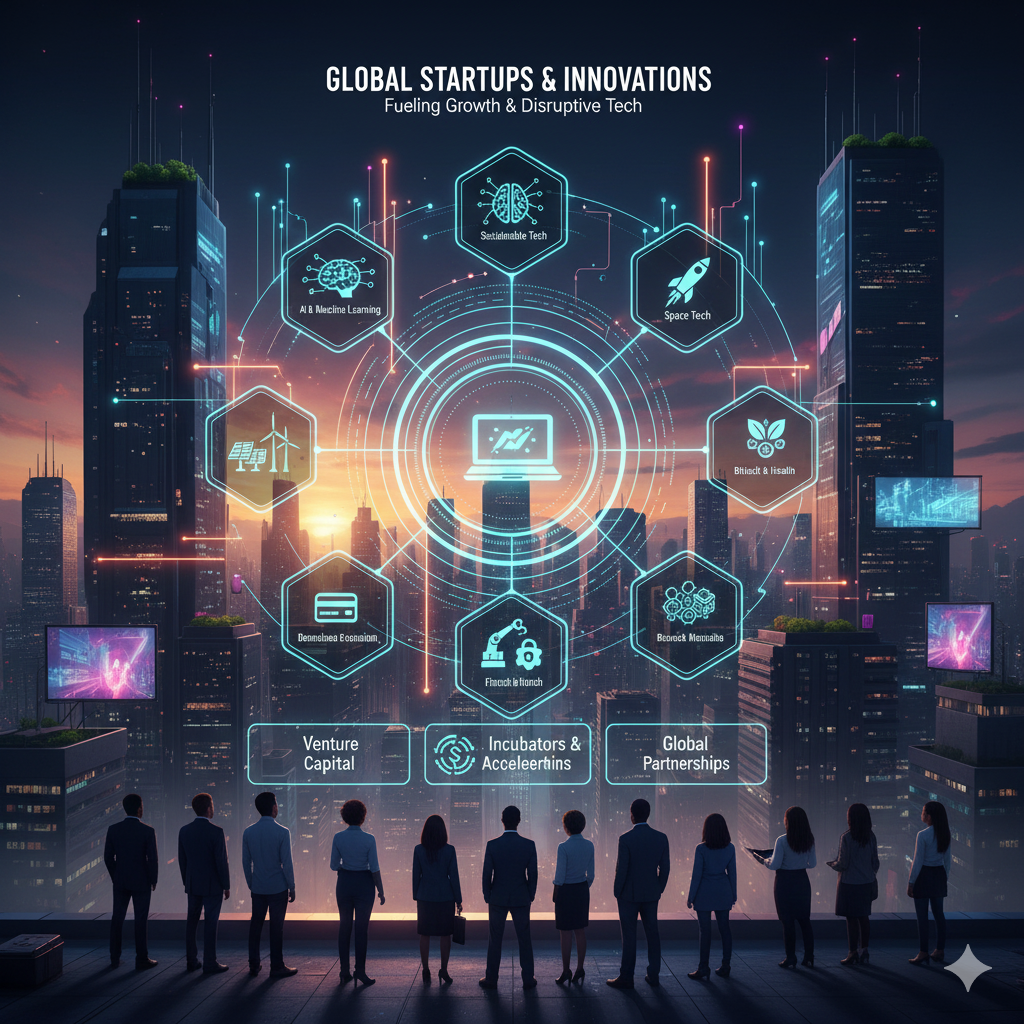
The global economy is a dynamic landscape, constantly reshaped by fresh ideas and disruptive technologies. At the heart of this transformation lies the vibrant ecosystem of Startups and Innovations. These nimble, often high-risk ventures are the engines of progress, challenging the status quo, creating new markets, and driving economic growth through their relentless pursuit of novel solutions. They represent the spark that ignites the future, transforming cutting-edge research into tangible products and services.
What Defines a Startup?
A startup isn’t just any new business. It’s typically characterized by:
- Innovation: A focus on solving a problem in a new, often technological, way.
- Scalability: The potential for rapid growth and expansion to a large market.
- Uncertainty: Operating under conditions of extreme risk, seeking to find a viable business model.
- Funding: Often reliant on external investment (venture capital, angel investors) to fuel growth before achieving profitability.
These attributes foster a culture of agility, experimentation, and a willingness to challenge established norms—precisely what drives groundbreaking innovation.
The Innovation Engine: Where Startups Shine
Startups are particularly adept at fostering innovation due to several inherent advantages:
- Agility and Speed: Free from legacy systems and bureaucratic processes, startups can pivot quickly, test ideas rapidly, and bring products to market faster than large, established corporations.
- Risk Tolerance: Startups inherently embrace risk. This allows them to pursue truly radical ideas that larger companies might deem too speculative, leading to breakthrough inventions.
- Specialized Focus: They often concentrate on solving a single, acute problem with a novel solution, allowing for deep expertise and targeted development.
- Talent Magnet: Startups attract ambitious, creative, and often younger talent eager to make a significant impact and work on cutting-edge projects.
Key Innovation Areas Driven by Startups Today
The current wave of startup innovation is concentrated in several high-impact sectors:
1. Artificial Intelligence & Machine Learning (AI/ML)
- Impact: Startups are democratizing AI, creating specialized tools for everything from personalized marketing and advanced data analytics to sophisticated chatbots and generative AI content creation. They are making AI accessible to businesses of all sizes and developing niche applications that large tech giants might overlook.
- Examples: AI-powered language models, computer vision for industrial inspection, predictive analytics for healthcare.
2. Sustainable Tech & Green Growth
- Impact: Addressing climate change and resource scarcity, startups are developing innovative solutions in renewable energy, circular economy models, sustainable agriculture, and eco-friendly materials. They are critical for achieving global sustainability goals.
- Examples: Novel battery technologies, carbon capture solutions, vertical farming systems, biodegradable packaging.
3. Space Tech & New Frontiers
- Impact: The burgeoning private space industry is almost entirely driven by startups. They are developing cheaper launch systems, satellite constellations for global internet, in-space manufacturing, and even asteroid mining concepts, making space more accessible and commercially viable.
- Examples: Reusable rockets, small satellite deployment, lunar landers, space tourism.
4. Biotech & Health Innovations
- Impact: From personalized medicine to advanced diagnostics and gene therapies, biotech startups are at the forefront of extending lifespans, curing diseases, and improving human well-being through biological engineering.
- Examples: CRISPR gene editing applications, AI-driven drug discovery, novel medical devices, cultivated meat alternatives.
5. Fintech & Blockchain
- Impact: Startups are disrupting traditional financial services with innovative payment systems, blockchain-based decentralized finance (DeFi), enhanced cybersecurity for transactions, and new investment platforms, driving financial inclusion and efficiency.
- Examples: Crypto wallets, peer-to-peer lending platforms, secure digital identity solutions.
Challenges and the Path Forward
Despite their promise, startups face significant hurdles: fierce competition, securing funding, scaling operations, and navigating complex regulatory environments. However, the ecosystem supporting them is also evolving, with:
- Incubators and Accelerators: Programs that provide mentorship, resources, and early-stage funding.
- Government Support: Policies that encourage innovation through grants, tax breaks, and research initiatives.
- Corporate Partnerships: Large companies collaborating with startups for mutual benefit, gaining innovation while providing market access.
Startups and their innovations are not just a segment of the economy; they are a vital force for progress. By continuously pushing boundaries, they transform scientific discoveries into real-world applications, create jobs, and pave the way for a future that is more connected, sustainable, and technologically advanced. Supporting this ecosystem means investing in the solutions and opportunities of tomorrow.


