

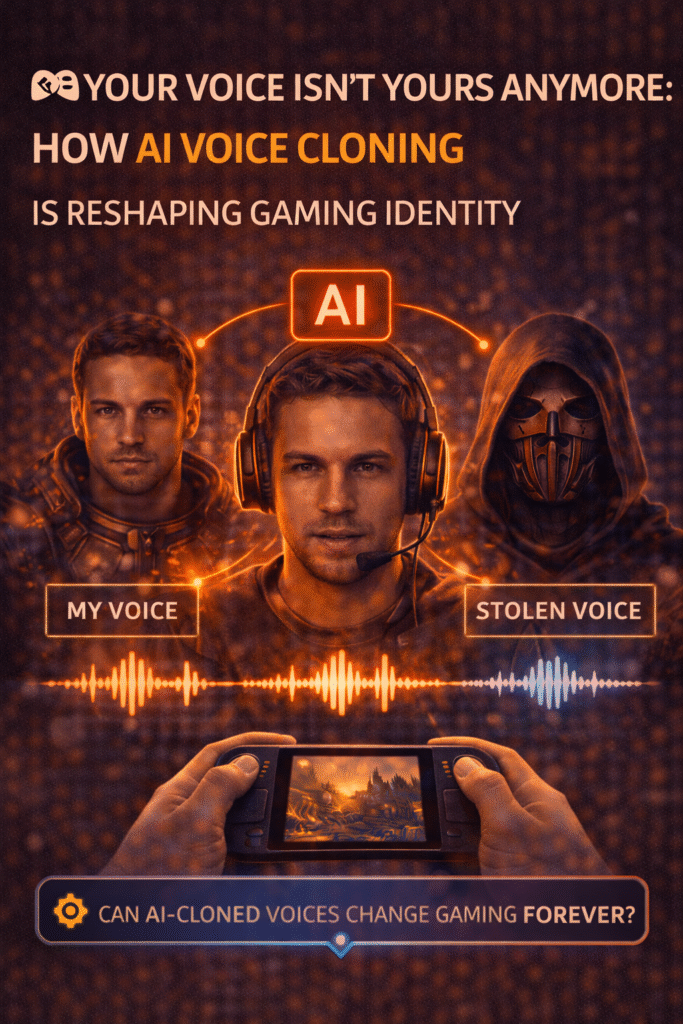
For years, your username defined who you were in a game.
In 2025, something far more personal is entering the picture.
Your voice.
With rapid advances in AI voice cloning, games are beginning to blur the line between a player’s real identity and their in-game presence — and it’s changing how players communicate, role-play, and protect themselves online.
🧠 What Is AI Voice Cloning in Gaming?
AI voice cloning uses machine learning to:
analyze voice samples
replicate tone, pitch, and emotion
generate realistic speech in real time
In gaming, this technology can:
recreate a player’s voice
generate custom character voices
modify speech live during gameplay
translate and re-voice dialogue naturally
A few seconds of audio can now be enough to build a digital voice model.
🚀 Why Voice Cloning Is Suddenly Everywhere in 2025
This technology has existed for years — but only recently became practical for games.
🎤 AI Models Became Shockingly Accurate
Modern AI can:
replicate emotional expression
maintain consistency across long sessions
match accents and speaking style
In many cases, cloned voices are indistinguishable from real ones.
⚡ Real-Time Processing Made It Usable
Earlier systems were too slow.
Now, voice cloning happens live — fast enough for:
multiplayer chat
cutscenes
streaming
role-playing servers
There’s no delay that breaks immersion.
🎯 How This Changes Gameplay and Social Interaction
Voice is no longer just communication.
It’s becoming a gameplay feature.
🎭 Perfect Role-Playing Experiences
In RPGs and online role-play servers:
players can speak as their character
voices can match race, age, or emotion
NPC conversations feel cinematic
Your character doesn’t just look different —
they sound authentic.
🔊 Consistent Voice Across Devices
Whether you’re on:
console
PC
mobile
cloud gaming
Your in-game voice identity stays the same.
Your digital self sounds identical everywhere.
😨 The Dark Side of Voice Cloning
This is where things get uncomfortable.
If AI can replicate your voice:
someone else can too.
Gamers are raising serious concerns:
voice impersonation scams
toxic behavior using stolen voices
fake clips created for harassment
identity abuse in multiplayer lobbies
Unlike usernames, voices are deeply personal.
🔥 Why This Topic Is Going Viral
Because players are starting to see examples:
AI-generated voice clips spreading online
streamers hearing “themselves” say things they never said
mods adding cloned celebrity voices to games
It feels futuristic — and disturbing.
The idea that your voice can exist without you is unsettling.
⚠️ Privacy, Consent, and Ownership Questions
Major questions remain unanswered:
Who owns your cloned voice?
Can developers store it?
Can it be sold or reused?
What happens if a game shuts down?
Voice data is biometric data — and regulation hasn’t caught up yet.
💰 How Studios May Monetize Voice Identity
Some companies are already experimenting with:
premium voice packs
licensed celebrity voices
AI-enhanced emotional speech
custom voice identities as cosmetics
Your voice could become a purchasable asset.
🔮 What the Future Might Look Like
In the coming years, gaming could introduce:
voice-locked accounts
consent-based voice storage
AI voice filters for safety
laws protecting digital voice identity
games where your voice evolves with your character
Voice may become as important as visuals.
🏁 Final Thoughts
Gaming has always been about expression.
First through characters.
Then through playstyle.
Now through voice.
AI voice cloning is giving players unprecedented freedom —
but also exposing them to entirely new risks.
The future of gaming won’t just ask:
“What does your character look like?”
It will ask:
“Whose voice is speaking?”
And how we answer that will define the next era of online play.


