

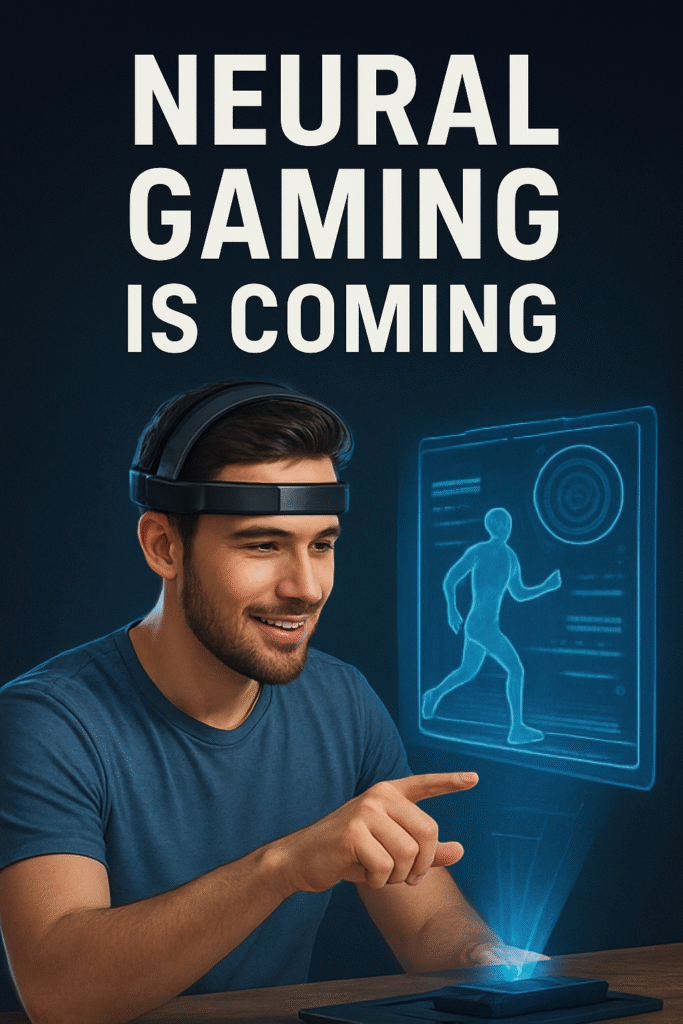
What if you didn’t need a controller?
No keyboard.
No mouse.
No touchscreen.
What if your brain alone could control the game?
In 2025, this idea is no longer science fiction.
Neural gaming — games controlled using brain signals — is quietly becoming one of the most disruptive technologies the gaming industry has ever seen.
And once it goes mainstream, gaming will never be the same.
🧠 What Is Neural Gaming?
Neural gaming uses brain–computer interfaces (BCIs) to translate electrical signals from your brain into in-game actions.
Instead of pressing buttons, the system reads:
- intention
- focus
- reaction
- emotional state
- muscle impulses from the brain
You think about moving forward — your character moves.
You focus harder — accuracy improves.
You relax — gameplay adapts.
Your brain becomes the controller.
🚀 Why Neural Gaming Is Suddenly Trending in 2025
For years, this technology existed only in labs.
Now, three things have changed:
1. Wearable Brain Tech Became Smaller
BCI headsets are no longer bulky helmets.
They now look like:
- lightweight headbands
- VR straps
- gaming headphones
Some can be worn for hours without discomfort.
2. AI Can Finally Read Brain Signals Accurately
Earlier systems were unreliable.
In 2025, AI models can:
- filter noise from brain signals
- detect intent in milliseconds
- adapt to each player’s brain patterns
This made neural input usable in real games.
3. VR and AR Need Better Controls
Controllers break immersion in VR.
Neural input feels natural — especially in:
- VR shooters
- racing simulators
- horror games
- meditation games
- esports training
This is why VR companies are investing heavily in neural gaming.
🎯 How Neural Gaming Changes Gameplay
Reaction Time Becomes Almost Zero
Brain signals move faster than fingers.
In competitive gaming, this could:
- redefine esports fairness
- eliminate hardware advantages
- create a new skill category
The fastest brain wins.
Games Can Read Your Emotions
Neural systems can detect:
- fear
- excitement
- stress
- boredom
- focus
Horror games get scarier when your fear drops.
Boss fights intensify when your focus rises.
Games slow down if stress increases too much.
The game responds to you, not just your actions.
Accessibility Is Revolutionized
Neural gaming opens doors for:
- players with physical disabilities
- people with limited motor control
- gamers unable to use controllers
This is one of the most inclusive breakthroughs in gaming history.
🎮 Neural Gaming and Esports: A New Era?
Esports organizations are already experimenting with:
- brain-reaction training
- focus measurement
- mental endurance tracking
- neural reflex enhancement
Future esports may include:
- “neural leagues”
- mental stamina scores
- brain-only challenges
Skill will be measured not just by reflexes —
but by mental clarity and control.
⚠️ The Controversial Side of Neural Gaming
This technology also raises big questions:
- Should brain data be stored?
- Can neural input be hacked?
- Will mental fatigue become a competitive issue?
- Is brain-enhanced gaming fair?
Regulation hasn’t caught up yet, and that’s fueling debates online — making this topic even more viral.
🔮 What the Future Looks Like
In the next few years, we may see:
- hybrid controller + brain input
- neural-powered VR worlds
- training games that improve focus and memory
- horror games that react to fear levels
- esports athletes training mental performance
- story games that change based on emotion
Gaming will no longer just test your hands.
It will test your mind.
🏁 Final Thoughts
Neural gaming isn’t about replacing controllers overnight.
It’s about opening an entirely new dimension of interaction.
For the first time, games are learning to understand the player from the inside — thoughts, focus, emotions.
This is one of the most futuristic and viral trends in gaming technology today.
The question is no longer:
“How fast are your fingers?”
It’s becoming:
“How strong is your mind?”


