

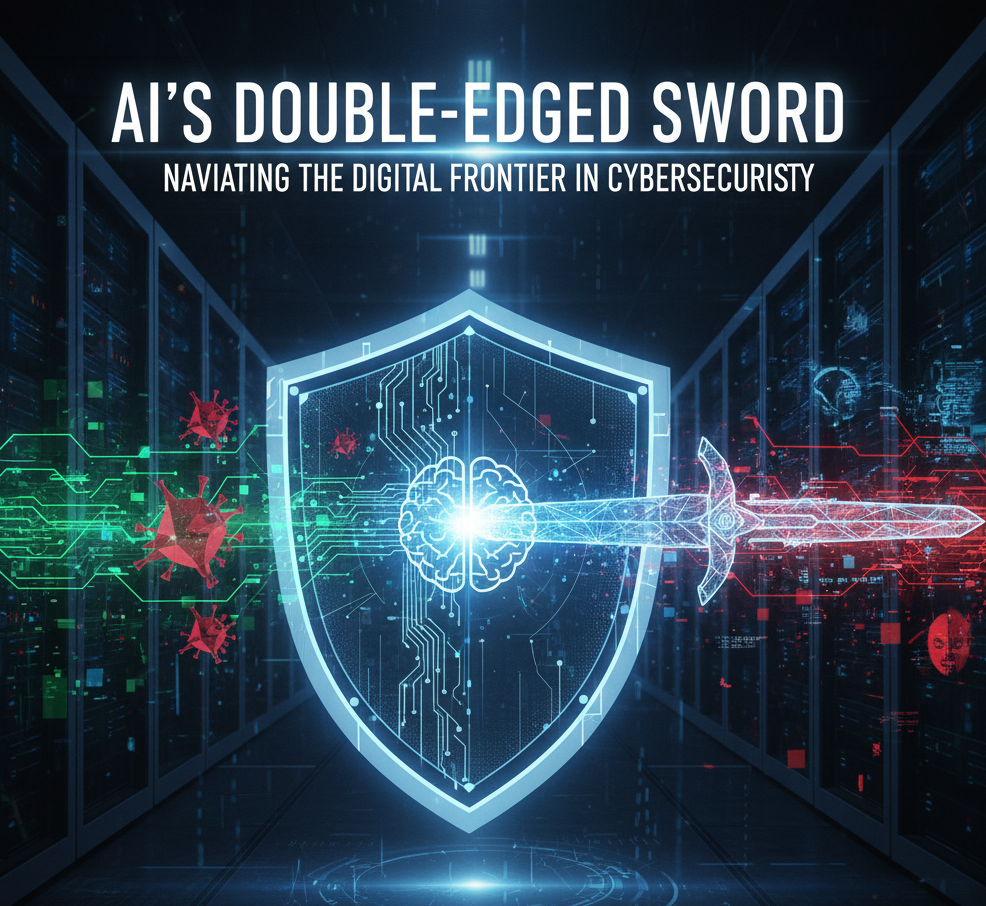
In an increasingly interconnected world, where our lives are inextricably woven into the fabric of the internet, cybersecurity is no longer just an IT department concern – it’s a fundamental pillar of our personal and professional well-being. And at the heart of this ever-evolving battleground sits Artificial Intelligence (AI), a powerful force that is simultaneously revolutionizing defense strategies and empowering the very adversaries we seek to thwart.
The AI Advantage: Fortifying Our Digital Walls
Imagine a digital sentinel, tirelessly monitoring networks, sifting through petabytes of data in milliseconds, and identifying anomalies that would take human analysts weeks to uncover. This isn’t science fiction; it’s the reality of AI in cybersecurity.
Here’s how AI is empowering our defenses:
- Threat Detection & Prediction: AI algorithms can learn patterns of malicious activity, identify zero-day attacks (previously unknown threats), and even predict potential vulnerabilities before they are exploited. This proactive approach significantly reduces the window of opportunity for attackers.
- Automated Incident Response: When a breach occurs, every second counts. AI can automate the response process, isolating compromised systems, patching vulnerabilities, and even neutralizing threats without human intervention, dramatically minimizing damage.
- Behavioral Analytics: By establishing baselines of normal user and network behavior, AI can flag deviations that might indicate an insider threat or a compromised account, providing an early warning system against sophisticated attacks.
- Vulnerability Management: AI can scan code, configurations, and systems to identify weaknesses that attackers could exploit, helping organizations prioritize and remediate vulnerabilities more effectively.
The Dark Side of Innovation: AI for Attackers
However, just as AI can be a shield, it can also be a sword in the hands of malicious actors. Cybercriminals are increasingly leveraging AI to enhance their attack capabilities, creating a sophisticated arms race in the digital realm.
How attackers are weaponizing AI:
- Automated Phishing & Social Engineering: AI can craft highly convincing phishing emails, personalized to individual targets, and even generate deepfake audio or video to trick victims into revealing sensitive information.
- Evasive Malware: AI-powered malware can learn to adapt and evade traditional detection mechanisms, making it incredibly difficult to identify and neutralize.
- Automated Vulnerability Exploitation: Attackers can use AI to scan for and exploit vulnerabilities at an unprecedented scale and speed, launching targeted attacks with minimal human effort.
- Distributed Denial of Service (DDoS) Attacks: AI can orchestrate massive DDoS attacks, overwhelming systems and disrupting services with increased efficiency and resilience.
The Latest in the Trenches: News from the Front Lines
The dynamic interplay between AI and cybersecurity is a constant source of innovation and, at times, alarm. A recent development highlighting this tension is the increasing focus on AI-powered defensive solutions in critical infrastructure protection. Governments and private entities are investing heavily in AI-driven anomaly detection and predictive analytics to safeguard essential services like power grids, water treatment plants, and transportation networks from sophisticated cyber threats. This move underscores the recognition that human-led defenses alone are no longer sufficient against the evolving AI-enabled threat landscape. The ongoing challenge remains to ensure that these advanced defensive capabilities can keep pace with the rapid advancements in AI-driven attack methodologies.


